The post Japan: Two Decades of Ecological Footprinting appeared first on Global Footprint Network.
]]>In 1996, Japan was the first country to officially adopt the Ecological Footprint. Now, Global Footprint Network works with Ecological Footprint Japan to serve Japan’s cities, businesses, regional governments, national ministries, research organizations, and NGOs.
Jump to:
Government Engagement Public Awareness Business Footprinting
History of the Ecological Footprint in Japan
Japan, home to the world’s most populous metropolitan area (Tokyo) and the third largest economy in the world, has historically been very resource conscious due to its limited biocapacity. The Ecological Footprint was first mentioned in an official Japanese government document in 1996, seven years before Global Footprint Network was founded. The early foothold in Japan was facilitated by Yoshihiko Wada, Ph.D., a professor of economics at Doshisha University. Prof. Wada collaborated with Dr. Mathis Wackernagel on Footprint research in its early years and also received his PhD under Professor William E. Rees.
In 2012, Mathis Wackernagel and Bill Rees jointly received Japan’s prestigious environmental prize: the Blue Planet Prize.
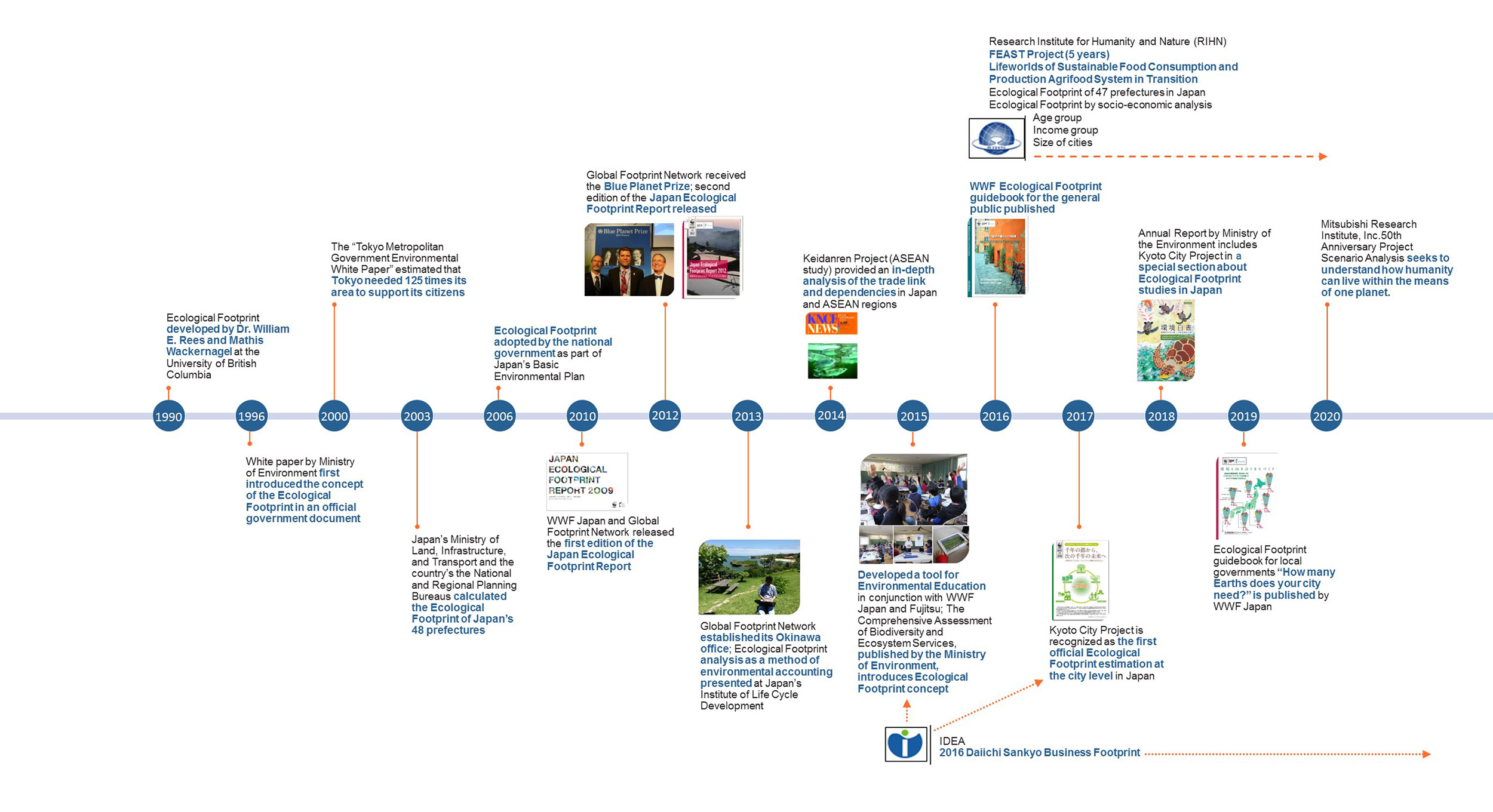
click image to view full size
Government Engagement
The Japanese Ministry of the Environment’s 2018 Annual Report featured the Ecological Footprint results for Japan and highlighted Global Footprint Network’s Kyoto city project, completed in collaboration with IDEA Consultants and WWF Japan (pages 68-70). The report noted that if everyone in the world lived like residents in Kyoto, we would need two Earths. This metric would drop to 1.4 Earths if Kyoto achieves its goal of reducing greenhouse gas emissions 40% in 2030 from 1990 levels.
The country’s Ministry of the Environment first included the Ecological Footprint in its 1996 Annual White Paper, which was the first major step by the national government to take action on sustainability. Since then, the Footprint has been a key indicator in several of Japan’s sustainability campaigns. Highlights (in chronological order) include:
- The major metropolitan area of Tokyo released the “Tokyo Metropolitan Government Environmental White Paper” in 2000 and estimated that Tokyo needed 125 times its area to support its citizens. This report marked the first time a city in Japan used Ecological Footprint accounting to calculate its natural resource consumption and make strides to change its trajectory towards one planet living.
- Japan’s Ministry of Land, Infrastructure, and Transport and National and Regional Planning Bureaus calculated the Ecological Footprint of Japan’s 47 prefectures in a 2003 joint report. This effort marked the first time the Footprint was used at a subnational level to help regional agencies understand their resource constraints.
- The Ecological Footprint was adopted by the national government as part of Japan’s Basic Environmental Plan in 2006 and featured strategies for pursuing a more sustainable society and policies for developing diverse energy sources.
- Global Footprint Network supported IDEA Consultants Inc. in the report released by the Ministry of Environment in 2016. The report, the Comprehensive Assessment of Biodiversity and Ecosystem Services (JBO2: Japan Biodiversity Outlook 2), acknowledged the Ecological Footprint in analyzing ecosystem services and human well-being.
- Kyoto City became the first local government in Japan to calculate its own Footprint in 2016 as part of a joint project involving IDEA Consultants, WWF Japan, and Global Footprint Network. Results in the report showed that the carbon Footprint accounts for 64 percent of the total Ecological Footprint and that if everyone lived like the average Kyoto resident, we would need two planets. The report also set an ambitious goal for Kyoto to reduce carbon emissions 40 percent by 2030 in order to reduce its Ecological Footprint.
- Japan’s Cabinet officially recognized the Ecological Footprint as a key indicator with its adoption of the country’s National Biodiversity Strategy 2023-2030. The Footprint is included as an indicator in two of the Strategy’s five goals: achieving a nature-positive economy (target strategy 3-2) and increasing individuals’ understanding of biodiversity’s value (target strategy 4-2).
Public awareness
To amplify the efforts of the Japanese government to use the Ecological Footprint in policymaking, Global Footprint Network teamed up with organizations such as WWF Japan to help raise sustainability awareness through several campaigns.
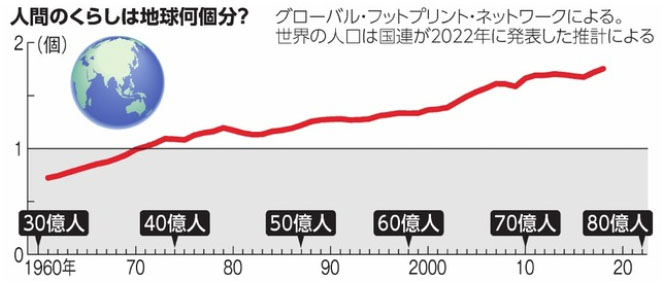
- In 2023, The Asahi Shimbun, one of Japan’s largest newspapers, published a story called “8 billion people are straining our Earth to the breaking point”. It is based on Global Footprint Network data. The Japanese version of the story includes a graph showing how humanity’s Ecological Footprint has changed over time.
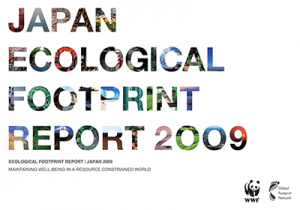 The 2010 Ecological Footprint Report found Japan’s Ecological Footprint exceeded the world average by a whopping 50 percent. The report included policy recommendations for decision-makers and tips for consumers to help change consumption patterns and reduce carbon emissions.
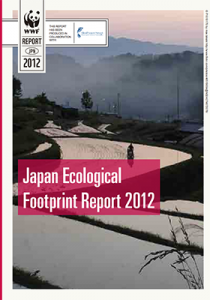 The 2012 Ecological Footprint Report updated Japan’s data to track its progress toward living within the means of our one planet. The report also tracked Footprint trends to historical milestones, and compared the Footprints of Aichi, Okinawa and Tokyo.The report also analyzed the impact of the Fukushima nuclear disaster on biocapacity, estimating it rendered between 2.7 percent and 10 percent of the country’s biocapacity unproductive. Another striking result was that 20 percent of Japan’s Ecological Footprint is associated with food consumption. The report reiterated the need for governments, nonprofits, and consumers to work together to reduce carbon emissions and resource consumption.
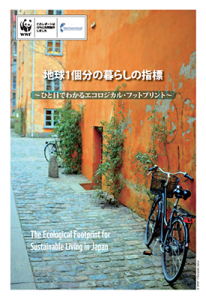 “The Ecological Footprint for Sustainable Living in Japan” (2014) was distributed to the general public to inspire individuals to change behavior, such as reducing food waste, and focus attention on policy change, such as a shift to renewable energy, to reduce the country’s Ecological Footprint.
- In order to raise awareness about the Footprint as a policy-making tool, Global Footprint Network partnered with IDEA Consultants Inc. in 2014 and collaborated on six projects centered on incorporating the Footprint in business, policy-making, and education decisions.
- The Japanese electric company Fujistu created an environmental education tool with WWF Japan and Global Footprint Network’s support. Research Economist Katusnori Iha also (center image below) has taught students about the Ecological Footprint.

- The “How many Earths does your city need” (2019) brochure
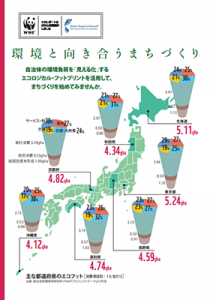 was created for local governments to introduce the Ecological Footprint concept and demonstrate its use in environmental policy and city planning. This brochure builds upon “The Ecological Footprint for Sustainable Living in Japan” from 2015 that focused on the general public.
 - As part of the FEAST Project (Lifeworlds of Sustainable Food Consumption and Production-Agrifood Systems in Transition), Global Footprint Network computed the Ecological Footprint for Japan’s 47 prefectures, using a replicable top-down Footprint approach. The analysis included a breakdown of the Ecological Footprint by demographic or other socio-economic indicators. Results indicate:
- The Ecological Footprint varied considerably among the prefectures.
- Total Ecological Footprint and food Footprints increase with urbanization, age, and income.
- Economic decentralization and local food production may be key sustainability strategies.
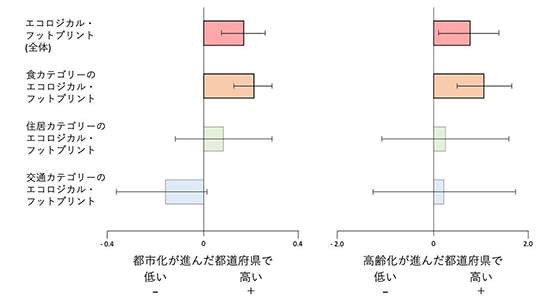
- The FEAST project takes a transdisciplinary approach to explore the reality of, and potential for, sustainable agrifood transition in Asia (Japan, Thailand, Bhutan, and China). Outcomes of the project are detailed in “Decentralization & local food: Japan’s regional Ecological Footprints indicate localized sustainability strategies” published in the Journal of Cleaner Production. Additionally, the project has been covered in Nikkei, Japan’s leading economics newspaper.
Business Footprinting
After the Footprint gained traction with government policy makers, businesses began using the concept to help fully understand their environmental impact.
- In 2012, the Kao Corporation, a large Japanese chemicals and cosmetics company, presented the Ecological Footprint at Japan’s Institute of Life Cycle Development in order for businesses to better understand their total environmental impact.
- The Ecological Footprint also has been used in trade analysis. In collaboration with the Keidanren Conservation Nature Fund and the Association of Southeast Asian Nations (ASEAN), Global Footprint Network analyzed the trade links and dependencies of southeast Asian nations using the National Footprint and Biocapacity Accounts and environmentally extended multi-regional input-output analysis (MRIO) methods. The results were published in the Asian Biotechnology and Development Review.
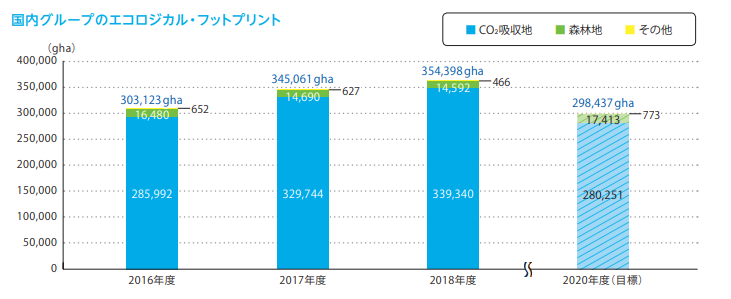
- Daiichi-Sankyo, a global pharmaceutical company with Japanese origins, applied the Ecological Footprint concept to improve their environmental management. For this multi-year collaboration beginning in 2016, we work with IDEA Consultants Inc. on the business’ Footprint project (trends shown in figure below). Daiichi-Sankyo’s Footprint and reduction targets are detailed on their website.
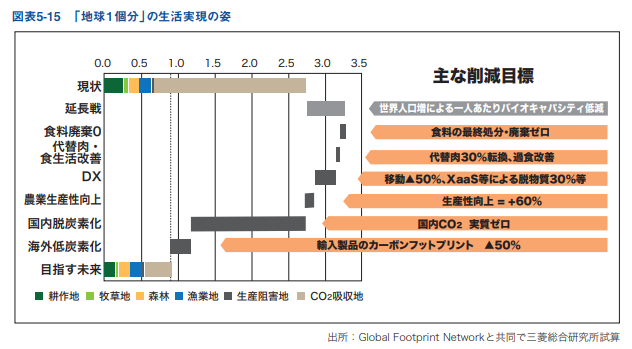
- With the Mitsubishi Research Institute (MRI), Global Footprint Network developed an Ecological Footprint scenario model to envision ways to achieve one planet living. The objective of our engagement in MRI’s 50th Anniversary Project is to support their vision of the future for 2070, fifty years from now. Understanding how humanity can live within the means of one planet is a top priority considering human population may reach 10 billion around 2070. The final report (in Japanese) details the assessments and assumptions made. The figure below shows that Japan can meet one planet living by 2070 if all scenarios can be achieved.
Long-term relationships characterized by mutual respect with our partners have been crucial to the success of Global Footprint Network’s work in Japan. Global Footprint Network looks forward to continued collaboration with these partners in the future and also welcomes inquiries from new potential partners to further amplify our work.
For more information about working with Global Footprint Network in Japan, please contact Katsunori Iha at Katsunori@footprintnetwork.org.
Reports
Kyoto City Basic Environmental Plan Report
Report of Comprehensive Assessment of Biodiversity and Ecosystem Services in Japan (Japanese)
Kyoto City’s Ecological Footprint
Iha, K., Poblete, P., Panda, D., Winkler, S., 2015. A Footprint Analysis of ASEAN: Ensuring Sustainable Development in an Increasingly Resource Constrained World. Asian Biotechnology and Development Review, 17, 57-67.
The post Japan: Two Decades of Ecological Footprinting appeared first on Global Footprint Network.
]]>The post Slovenia appeared first on Global Footprint Network.
]]>Key findings from the project include:
- After the 2008 financial crisis, the Ecological Footprint of Slovenia decreased to its lowest point in 2013 and has since increased 5.7%, largely driven by increases in the carbon Footprint and forest products Footprint.
- Per capita Ecological Footprints do not vary widely between regions.
Although this is common in many countries, additional analysis is recommended.
- The southern regions of Jugovzhodna Slovenija and Primorsko-notranjska are proportionally the richest in forest biocapacity and have the highest biocapacity per hectare.
- Pomurska and Podravska in the north, by contrast, have higher proportions of croplands and the lowest biocapacity per hectare.
- Three categories of household consumption make up three quarters of household consumption for all regions:
-
- transportation (25-26%)
- housing, water, electricity, gas and other fuels (26-27%)
- food and non-alcoholic beverages (21-23%)
Global Footprint Network made the following four policy recommendations:
- Energy-efficient urban planning, including net-zero buildings. Housing and personal transportation are the two largest Ecological Footprint categories in Slovenian regions. Identifying population centers and areas of rapid development will be particularly important in setting the stage for Slovenia’s success in 2030. Careful infrastructure planning that reduces energy demand in everyday life, from urban planning to net-zero buildings is a key component of resilient, resource-efficient Slovenia. This is a priority for regions with the largest transportation and housing footprints such as Koroska, Osrednjeslovenska, and Obalno-kraska.
- Transition to low-carbon renewable energy systems. Stable and predictable energy systems are key to resilience. By 2050, we expect to live in a world free of fossil fuel. Energy policy must be forward-looking to avoid the trap of stranded assets associated with industrial, fossil-fuel based economies and seek renewable energy solutions. The sooner regions adapt to this frame of thinking, the more prepared we will be for the future.
- Prioritize forest management to preserve biocapacity. Slovenian forests are a vital natural asset. From a biocapacity perspective, over 75% of Slovenia’s biocapacity comes from forest, and from a footprint perspective, per-capita consumption of forest products is among the 10 highest in the world. From a biocapacity perspective, over 75% of Slovenia’s biocapacity comes from forest, and from a footprint perspective, per-capita consumption of forest products is among the 10 highest in the world.
- Prioritize regenerative agriculture to enhance cropland biocapacity. In the northern regions where cropland is primarily located, regenerative practices will improve the biocapacity of the land. This will be a critical need in the future when biocapacity becomes more limited and the cost of natural resources goes up.
Slovenia is among more than a dozen countries which have used the Ecological Footprint to help guide environmental policy. Other countries include Ecuador, Japan, the Philippines, Switzerland, and the United Arab Emirates.
Additional Resources:
Press Release: Slovenia Ministry of the Environment and Global Footprint Network outline use of Footprint for environmental and development strategies
Blog Post: The Ecological Footprint is a fair metric for Slovenia to achieve its climate goals.
Video
Brochure
 Slovenia’s Ecological Footprint (English)
 Slovenia’s Ecological Footprint (Slovenian)
The post Slovenia appeared first on Global Footprint Network.
]]>The post Switzerland appeared first on Global Footprint Network.
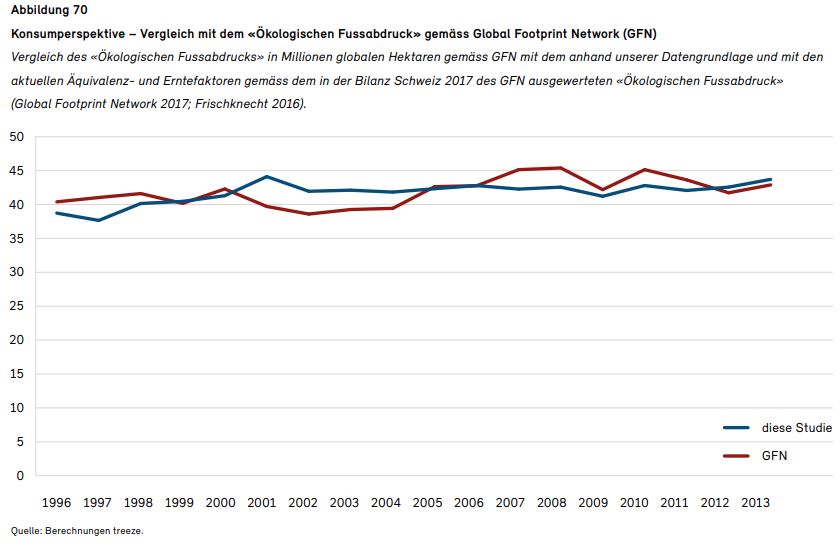
]]>In December 2006, Switzerland became the first country to work with Global Footprint Network to examine and understand its Ecological Footprint and biocapacity results. Since then, more than a dozen other countries have followed suit. The Swiss government published the initial review in a report titled Switzerland’s Ecological Footprint – A Contribution to the Sustainability Debate. The report and its technical background study were written by INFRAS, a leading Swiss policy research institute., By comparing the international data sources used by Global Footprint Network to the statistics used by the Swiss Federal Statistical Office, they concluded that the data sets were largely consistent. A second review in 2018 reconfirmed Global Footprint Network’s results with a very small margin of difference (shown in Figure 70 on page 87 of the technical report).
The Federal Office of Spatial Development and the Statistical Office used the Ecological Footprint in the Swiss government’s “Sustainable Development Report 2012” launched at Rio+20 (page 54). The Ecological Footprint also went on to become an official indicator in Switzerland’s sustainable development monitoring system, and since 2008, it has been published annually by the Swiss Federal Statistical Office. They maintain a webpage with key statistics on the Swiss Footprint and recognize that “almost three planet Earths would be needed if everyone lived like the Swiss population”. The Swiss Federal Office for the Environment also maintains a webpage about Switzerland’s Ecological Footprint results.
In 2014, BakBasel and Global Footprint Network were invited by the Swiss government to explore The Significance of Global Resource Availability to Swiss Competitiveness, which was presented in a report of the same name and is available in English (3 MB), German (3 MB) and French (3 MB). It was the focus of the Swiss Sustainable Development Dialogues in 2014 (with presentations available in French and German).
In the fall 2016, Switzerland made history as the first country to vote on whether to implement a green economy into its constitution, with the goal of living within the means of one planet by 2050, based on Ecological Footprint accounting. 36% of the voters were in favor and more information about this historic vote is available in French and German.
To advance this conversation, Global Footprint Network invited Switzerland with a proposal “Watch Out, dear Switzerland” that outlines how Switzerland could tackle its growing resource fragility.
Click here to learn about Switzerland’s ecological performance
“I strongly commend Global Footprint Network for advancing such a comprehensive resource accounting system. This tool is critical for building a sustainable and prosperous future”
MAYA GRAF, former President and current member of the National Council of Switzerland
Resources
You can find more information about Global Footprint Network-Switzerland here.
Switzerland Fact Sheet with key data about Switzerland’s ecological performance.
achtung-schweiz.org: Global Footprint Network’s proposal for a resource secure Switzerland. Produced originally in 2016 in the context of the Swiss vote on a “green economy”.
How Switzerland made history with green economy vote. Global Footprint Network Blog Post (2016)
Switzerland’s ecological footprint, Swiss Federal Statistical Office, 2020.
Earth Overshoot Day perspective for Switzerland.
Switzerland’s ecological footprint: A contribution to the sustainability debate, Federal Office for Spatial Development / Swiss Agency for Development and Cooperation / Federal Statistical Office / Federal Office for the Environment, 2006.
Environmental Footprints of Switzerland, Swiss Federal Office for the Environment, 2018.
«Ab heute leben wir auf Pump», Neue Zürcher Zeitung, July 30, 2019, (German).
«Mathis Wackernagel: “Privilegien und Resignation – ein toxisches Gemisch“», swissinfo, Mach 2022. (English, French, Italian, Portuguese)
The post Switzerland appeared first on Global Footprint Network.
]]>The post United Arab Emirates appeared first on Global Footprint Network.
]]>The government launched the Al Basma Al Beeiya (the Ecological Footprint) Initiative in 2007 to understand the numbers and methodology behind the ranking and began a multi-stakeholder collaboration involving Global Footprint Network that continues today. The initiative is currently a partnership between the Ministry of Environment and Water, the Environment Agency Abu Dhabi, Emirates Authority for Standardization and Metrology, Emirates Wildlife Society-World Wildlife Fund and Global Footprint Network with the following mission: “to ensure a sustainable future by measuring and understanding the impact of our ways of living on planet Earth.”

The launch of the Ecological Footprint Initiative set the UAE on a course to becoming the third country in the world, after Switzerland and Japan, to conduct in-depth research on its Ecological Footprint. Today the UAE initiative stands as an exemplary model for nations in using the Ecological Footprint to measure consumption patterns and guide the development of effective policies that will lead to real Footprint reductions. Some of the world’s most advanced Ecological Footprint research and most innovative Footprint-based awareness campaigns have been launched in the UAE, with support from the highest levels of government.
“The United Arab Emirates, with its rapidly expanding economy, has also become increasingly resource dependent. This is why we have developed a close collaboration with Global Footprint Network: To better understand our Ecological Footprint and biocapacity trends and the challenges we face. This collaboration has helped us foster more effective relationships between ministries, and helped us make sustainable investments. Our goal is to secure great lives for all. To succeed in this goal requires living within the means of nature.”
New Energy Standards
One of the most recent outcomes from Global Footprint Network’s collaboration with the UAE is the approval of a new energy efficiency lighting regulation in October 2013 by Sheikh Al Maktoum, the Prime Minister of the UAE. “The new lighting standard will reduce the country’s energy consumption by 340 to 500 megawatts per year, which is equivalent to not using an average gas power station for six months,” said Rashid Bin Fahed, former Minister of Environment and Water.
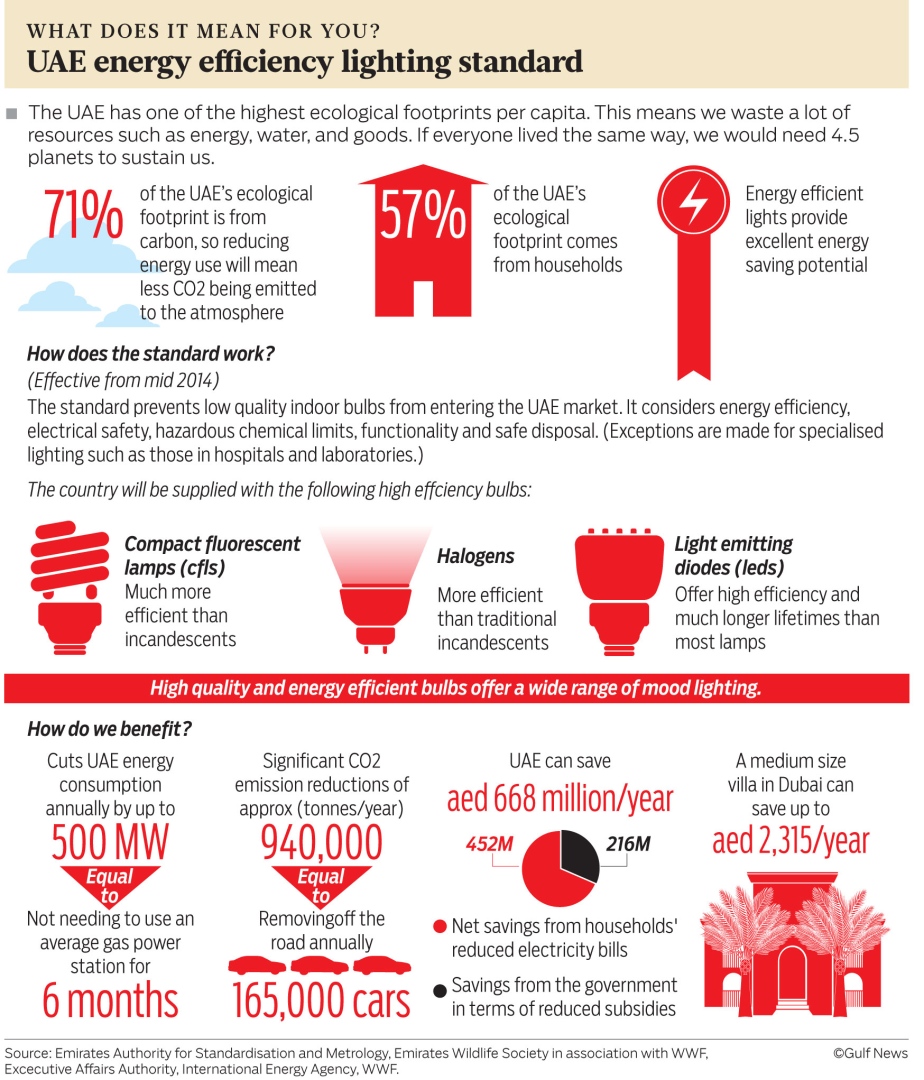
“This important achievement came as a result of the strong collaboration of all partners of the Ecological Footprint Initiative,” said H.E. Razan Al Mubarak, Secretary-General of Environment Agency—Abu Dhabi (EAD) in an article on the new lighting standard.
Heroes of the UAE
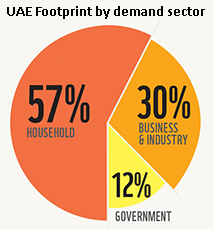 A key finding of the Ecological Footprint Initiative was that the household sector is the main contributor to the UAE’s Ecological Footprint, at 57 percent. These findings were applied to the development of a sustainable lifestyles campaign known as “Heroes of the UAE,” in which households were educated on ways to reduce their Footprints primarily through reducing energy and water consumption.
The Heroes of the UAE campaign, along with the Ecological Footprint Initiative, also developed a “lead-by-example” program aimed at motivating government agencies to conduct “green makeovers” for their offices. The program included workshops on the underlying environmental issues to ensure that staff members were actively engaged in reducing their Ecological Footprints. The first case study was completed in April 2010 for the Ministry of Environment and Water offices. The building underwent technical changes predicted to reduce its water consumption by 44 percent and its carbon Footprint associated with energy consumption by up to 24 percent.
From 2009 to 2010, researchers from EWS-WWF and the Masdar Institute, with technical work supported by Global Footprint Network, coordinated development scenarios to track how the inter-related water and electricity sectors might affect Abu Dhabi’s carbon dioxide emissions and the UAE’s per capita Ecological Footprint up to 2030. These scenarios assessed the impacts of increasing renewable energy use, more energy- and water-efficient equipment, and green building codes to de-carbonize the power and water sector: If the most ambitious measures were implemented in Abu Dhabi alone, by 2030 the Emirate’s CO2 emissions could be reduced by up to 40 percent and the UAE’s overall per capita Footprint could be reduced by 1 global hectare per person.
New Statistics Bureau
 The Footprint Initiative highlighted the urgent need for a UAE agency that could be identified nationally and internationally as the official source of UAE data and statistics. In response to the Footprint Initiative’s recommendation for such an agency, the UAE National Bureau of Statistics (NBS) was created in 2009. Its mission: to provide “up-to-date, high quality statistical data and information, which contribute in decision making, policy design and performance evaluation.”
Latest Work
Since 2013, Global Footprint Network has continued working with the UAE EFI on addressing data challenges and mobilizing the expertise of key stakeholders. In November 2014, Global Footprint Network and Emirates Wildlife Society organized a technical workshop for key data stakeholders in the UAE. Hosted by the National Bureau of Statistics in its headquarters, the workshop featured a discussion of data collection and reporting systems and data integrity issues that impact accurate, reliable and robust Footprint calculations in the UAE. In 2016, Global Footprint Network assisted in another verification project to improve calculations given the inconsistency between national and UN statistics for the UAE.
Video
Watch a video in English or Arabic from Emirates Wildlife Society—WWF that tells a colorful story about the effects of excessive resource consumption.
Report

Ecological Footprint Initiative Summary Report 2007-2010
Additional Resources
“Envisioning a Low Footprint Future for UAE,” newsletter feature story, 2009.
“UAE introduces indoor lighting standard: good for environment and good for economy,” WWF article on UAE lighting standard, 2014.
http://uae.panda.org/ews_wwf: WWF—UAE website.
The post United Arab Emirates appeared first on Global Footprint Network.
]]>The post China appeared first on Global Footprint Network.
]]>As a leading global economic power, China is undertaking a transformation to become an ecological civilization, a human civilization living in harmony with nature. Guizhou Province is at a crossroads that exemplifies the challenge of constructing an ecological civilization. As China’s most biodiverse and mountainous province, it seeks to improve the well-being of its diverse people, while embodying President Xi Jinping’s vision of an ecological civilization. Through an innovative collaboration with Switzerland, Guizhou aims to emulate Swiss successes in developing a resource-efficient, tourist-friendly, and prosperous economy.
Our Guizhou Footprint Initiative will create a data-driven decision-making framework based on Global Footprint Network’s Ecological Footprint accounting and the Miillennium Institute’s scenario modeling. This approach will empower decision-makers to identify the most effective choices for planning Guizhou’s future as a model ecological civilization. To do this, WWF-China, Guizhou Environmental Protection Bureau, Guizhou Academy of Environmental Science and Design, and Global Footprint Network are working together to:
- Analyze Ecological Footprint and biocapacity data to produce a technical summary report of key results and figures.
- Organize and host workshops with Guizhou government officials to interpret results and develop scenarios.
- Explore future development and investment options based on workshop outcomes.
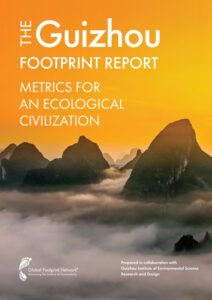
On July 8 at the EcoForum Global conference in Guizhou, Global Footprint Network launched “The Guizhou Footprint Report: Metrics for an Ecological Civilization,” which documents the resource security landscape of China and Guizhou.
Key findings of the report that highlight the challenges that Guizhou is facing include:
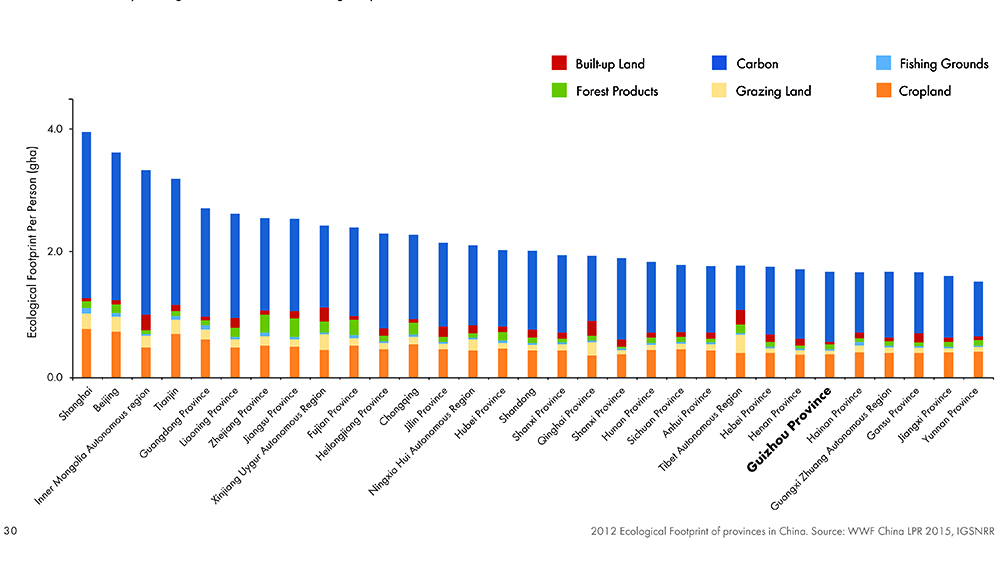
- With a per capita annual income of 18,700 yuan (2,852 US dollars) and Ecological Footprint of 1.72 global hectares (gha) per capita in 2012, Guizhou has the fifth lowest per capita income among China’s provinces and the sixth lowest per capita Ecological Footprint. The Ecological Footprint averages 3.4 global hectares per person in China and 5.8 global hectares per person in Switzerland. An updated calculation for the report indicates Guizhou’s Ecological Footprint has grown to 1.98 gha per capita.
- In Guizhou, 51% of the Footprint comes from private and government sector investment in lasting assets while the remaining 49% of the Footprint comes from household consumption, which includes food, housing, mobility, and goods and services. In China, 47% of the Footprint comes from private and government sector investment while the remaining 53% comes from household consumption. By contrast, in Switzerland, 29% of the Footprint comes from private investment and 71% comes from household consumption.
- Guizhou’s score on the U.N. Human Development Index (HDI), which measures human well-being, was calculated to be 0.62, which is below the goal of 0.7 for high development and below the average in China, at 0.73.
Ecological Footprint of China’s Provinces (2012)
Download the Guizhou Footprint Report in English or in Chinese. A two-page summary of the report is also available in Chinese.
This project was sponsored by the International Cooperation Agency of Switzerland and the Province of Guizhou.
Learn more about our partners.
The post China appeared first on Global Footprint Network.
]]>The post Philippines appeared first on Global Footprint Network.
]]>In addition to confronting increasing resource constraints, the Philippines is vulnerable to the compounding effects of climate change—including devastating typhoons—as a result of its location in the South Pacific. In 2011, the Philippine government and Global Footprint Network began a multi-phase initiative to analyze the country’s resource constraints and identify opportunities for Ecological Footprint accounting to help shape policy-making.
“We refuse, as a nation, to accept a future where super typhoons like Haiyan become a way of life. We refuse to accept that running away from storms, evacuating our families, suffering the devastation and misery of having to count our dead, become a way of life. We simply refuse to.”
Working closely with Philippines’ Climate Change Commissioner Nadarev “Yeb” Saño, and with funding from the French Agency for Development for Phase I, Global Footprint Network published A Measure for Resilience in 2012. Providing the Philippines with a new framework to measure resilience, the report was endorsed by President Benigno Aquino III with a foreward in the report and formally adopted by the Cabinet Cluster on Climate Change Adaptation and Mitigation. The Cabinet works to ensure the integrity of the environment by promoting natural resource sustainability and climate change adaptation and mitigation strategies and measures.
In Phase II, Global Footprint Network worked with Secretary Neric Acosta, Presidential Adviser for Environmental Protection and General Manager of the Laguna Lake Development Authority, to scale its Philippines analysis to the sub-national level. The area studied was the Laguna Lake region, which encompasses Metro Manila and includes some of the country’s most biologically productive land, and contributes more than 60 percent of the Philippines’ Gross Domestic Product. Restoring Balance in Laguna Lake Region reported on the challenges of the region, including deforestation, urbanization, a growing biocapacity deficit and dependence on resources from outside the region. The 2013 report, funded by Australian government’s development agency AusAid, launched in Manila and preceded a policy workshop and technical training seminar to build in-country capacity for the government to track, manage and benchmark its biocapacity and Ecological Footprint.
The Philippines is also in the process of finalizing its first National Land-Use Act, which will incorporate the Ecological Footprint as a national indicator. The legislation, a comprehensive national land-use policy, will protect areas from haphazard development and plan for the country’s use and management of the country’s physical resources.
Videos
Watch Yeb Saño, the Philippines Climate Change Commissioner, speak at the United Nations Climate Change Conference (COP 19) in Warsaw, Poland.
Reports
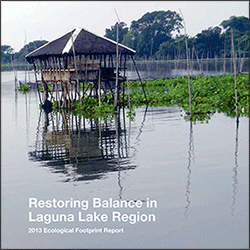 Restoring Balance in Laguna Lake Region (2013)
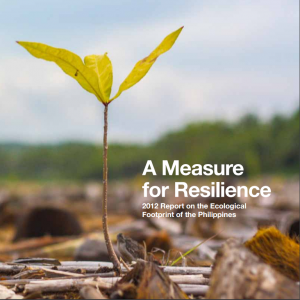 A Measure for Resilience (2012)
Additional Resources
Op-ed: Typhoon reminds us climate change is about people
San Francisco Chronicle, November 17, 2013
“Climate change is about people,” Pati Poblete, Global Footprint Network Asia regional director, asserts while reflecting on the Philippines’ Typhoon Haiyan. She emphasizes that the state of California can continue to effect positive change as a leader in climate protection and adaptation.
The post Philippines appeared first on Global Footprint Network.
]]>The post State of the States Report appeared first on Global Footprint Network.
]]>A Twitter chat on the report was hosted on July 14, 2015, at #USAfootprint. To view the Twitter chat, go here.
“State of the States” details the Ecological Footprint and resource availability of the 50 states and the District of Columbia. The report finds that resource consumption and availability varies dramatically state by state.
Highlights from the report include:
- The population of the United States is using twice the renewable natural resources and services that can be regenerated within its borders.
- The states with the largest per-person Ecological Footprints are Virginia, Maryland, and Delaware.
- The states with the smallest per-person Ecological Footprints are New York, Idaho, and Arkansas.
- Alaska, Texas, and Michigan are the most resource-abundant states based on biocapacity, a measure of bioproductive land.
- The states with the least biocapacity are Rhode Island, Delaware, and Arizona.
- California, Texas, and Florida have the highest ecological deficits.
- Alaska, South Dakota, and Montana have the greatest ecological reserves.
Additional Resources
Press Release: Today is the Ecological Deficit Day for the United States
Ecological Wealth of the 50 States
| State | Population | Gross Domestic Product, 2014 | Life Expectancy at Birth | Human Development Index | Carbon Footprint | Non-carbon Footprint | Total Ecological Footprint | Biocapacity |
|---|---|---|---|---|---|---|---|---|
| (millions) | (chained 2009 dollars per capita) | (years) | (global acres per person) | (global acres per person) | (global acres per person) | (global acres per person) | ||
 United States United States |
310,384,000 | 49,469 | 78.9 | 5.03 | 11.5 | 5.7 | 17.2 | 9.3 |
 Alabama Alabama |
4,779,736 | 37,593 | 75.4 | 4.04 | 11.2 | 5.1 | 16.3 | 14.8Ala |
 Alaska Alaska |
710,231 | 66,160 | 78.3 | 5.06 | 13.1 | 6.2 | 19.2 | 510.9 |
 Arizona Arizona |
6,392,017 | 38,743 | 79.6 | 4.89 | 10.3 | 5.4 | 15.8 | 1.1 |
 Arkansas Arkansas |
2,915,918 | 37,334 | 76.0 | 3.91 | 10.6 | 4.8 | 15.4 | 24.8 |
 California California |
37,253,956 | 54,462 | 80.8 | 5.40 | 10.5 | 6.0 | 16.5 | 1.9 |
 Colorado Colorado |
5,029,196 | 52,214 | 80.0 | 5.53 | 13.4 | 6.6 | 20.0 | 5.8 |
 Connecticut Connecticut |
3,574,097 | 64,676 | 80.8 | 6.17 | 13.7 | 7.8 | 21.5 | 2.0 |
 Delaware Delaware |
897,934 | 60,551 | 78.4 | 5.22 | 16.6 | 6.8 | 23.4 | 3.4 |
 District of Columbia District of Columbia |
601,723 | 159,386 | 76.5 | 6.08 | 15.8 | 6.3 | 22.0 | 0.2 |
 Florida Florida |
18,801,310 | 38,690 | 79.4 | 4.82 | 10.9 | 5.2 | 16.0 | 4.6 |
 Georgia Georgia |
9,687,653 | 43,131 | 77.2 | 4.62 | 11.6 | 5.4 | 17.0 | 8.2 |
 Hawaii Hawaii |
1,360,301 | 49,686 | 81.3 | 5.53 | 11.3 | 5.8 | 17.1 | - |
 Idaho Idaho |
1,567,582 | 35,235 | 79.5 | 4.50 | 9.5 | 5.8 | 15.3 | 17.0 |
 Illinois Illinois |
12,830,632 | 52,827 | 79.0 | 5.31 | 11.3 | 5.8 | 17.2 | 5.9 |
 Indiana Indiana |
6,483,802 | 43,861 | 77.6 | 4.56 | 13.1 | 6.0 | 19.1 | 7.7 |
 Iowa Iowa |
3,046,355 | 49,075 | 79.7 | 5.03 | 13.9 | 6.6 | 20.5 | 21.0 |
 Kansas Kansas |
2,853,118 | 45,765 | 78.7 | 4.96 | 13.1 | 6.0 | 19.1 | 26.2 |
 Kentucky Kentucky |
4,339,367 | 38,938 | 76.0 | 4.02 | 14.2 | 5.3 | 19.5 | 13.9 |
 Louisiana Louisiana |
4,533,372 | 46,448 | 75.7 | 4.12 | 12.0 | 5.3 | 17.3 | 13.1 |
 Maine Maine |
1,328,361 | 38,327 | 79.2 | 4.93 | 10.1 | 5.7 | 15.8 | 30.5 |
 Maryland Maryland |
5,773,552 | 53,759 | 78.8 | 5.94 | 16.9 | 7.4 | 24.3 | 2.5 |
 Mass. Mass. |
6,547,629 | 63,005 | 80.5 | 6.16 | 12.0 | 6.6 | 18.6 | 1.7 |
 Michigan Michigan |
9,883,640 | 42,110 | 78.2 | 4.76 | 11.2 | 5.5 | 16.6 | 11.8 |
 Minnesota Minnesota |
5,303,925 | 52,801 | 81.1 | 5.69 | 12.4 | 6.4 | 18.8 | 16.9 |
 Mississippi Mississippi |
2,967,297 | 31,551 | 75.0 | 3.81 | 10.7 | 4.9 | 15.6 | 21.7 |
 Missouri Missouri |
5,988,927 | 42,854 | 77.5 | 4.60 | 13.4 | 6.1 | 19.5 | 16.2 |
 Montana Montana |
989,415 | 38,539 | 78.5 | 4.54 | 10.9 | 5.2 | 16.1 | 54.3 |
 Nebraska Nebraska |
1,826,341 | 52,724 | 79.8 | 5.11 | 13.5 | 6.7 | 20.3 | 38.1 |
 Nevada Nevada |
2,700,551 | 42,539 | 78.1 | 4.63 | 11.8 | 6.4 | 18.2 | 4.1 |
 New Hampshire New Hampshire |
1,316,470 | 49,951 | 80.3 | 5.73 | 13.6 | 7.8 | 21.4 | 8.8 |
 New Jersey New Jersey |
8,791,894 | 56,405 | 80.3 | 6.12 | 11.9 | 6.8 | 18.7 | 1.3 |
 New Mexico New Mexico |
2,059,179 | 40,081 | 78.4 | 4.52 | 11.3 | 5.5 | 16.8 | 11.9 |
 New York New York |
19,378,102 | 64,818 | 80.5 | 5.66 | 9.3 | 5.0 | 14.2 | 3.5 |
 North Carolina North Carolina |
9,535,483 | 44,281 | 77.8 | 4.57 | 12.2 | 5.4 | 17.6 | 7.6 |
 North Dakota North Dakota |
672,591 | 65,225 | 79.5 | 4.90 | 15.2 | 6.7 | 22.0 | 38.5 |
 Ohio Ohio |
11,536,504 | 45,887 | 77.8 | 4.71 | 12.4 | 5.8 | 18.3 | 5.5 |
 Oklahoma Oklahoma |
3,751,351 | 41,871 | 75.9 | 4.14 | 13.4 | 5.6 | 19.1 | 20.2 |
 Oregon Oregon |
3,831,074 | 51,329 | 79.5 | 4.86 | 9.8 | 5.9 | 15.7 | 17.4 |
 Pennsylvania Pennsylvania |
12,702,379 | 47,637 | 78.5 | 5.07 | 10.4 | 5.4 | 15.8 | 4.9 |
 Rhode Island Rhode Island |
1,052,567 | 47,901 | 79.9 | 5.38 | 11.4 | 6.2 | 17.5 | 1.5 |
 South Carolina South Carolina |
4,625,364 | 36,125 | 77.0 | 4.35 | 10.7 | 5.2 | 16.0 | 9.3 |
 South Dakota South Dakota |
814,180 | 46,688 | 79.5 | 4.79 | 11.2 | 6.1 | 17.3 | 72.3 |
 Tennessee Tennessee |
6,346,105 | 42,115 | 76.3 | 4.22 | 11.3 | 5.0 | 16.3 | 9.9 |
 Texas Texas |
25,145,561 | 54,433 | 78.5 | 4.65 | 12.8 | 5.8 | 18.6 | 6.7 |
 Utah Utah |
2,763,885 | 43,555 | 80.2 | 5.03 | 14.8 | 7.1 | 22.0 | 5.0 |
 Vermont Vermont |
625,741 | 43,354 | 80.5 | 5.31 | 10.2 | 6.5 | 16.7 | 19.5 |
 Virginia Virginia |
8,001,024 | 51,338 | 79.0 | 5.47 | 17.0 | 7.7 | 24.6 | 7.4 |
 Washington Washington |
6,724,540 | 55,298 | 79.9 | 5.40 | 10.6 | 6.3 | 17.0 | 10.6 |
 West Virginia West Virginia |
1,852,994 | 36,769 | 75.4 | 3.95 | 13.9 | 5.3 | 19.2 | 19.4 |
 Wisconsin Wisconsin |
5,686,986 | 46,665 | 80.0 | 5.16 | 12.9 | 6.3 | 19.2 | 14.1 |
 Wyoming Wyoming |
563,626 | 64,309 | 78.3 | 4.83 | 13.9 | 6.5 | 20.4 | 39.8 |
Data Table References
Population: 2010 U.S. Census
GDP, 2014: U.S. Bureau of Economic Analysis
Life Expectancy at Birth: Measure of America Human Development Index (HDI) and Supplemental Indicators 2013–2014
Human Development Index: Measure of America Human Development Index (HDI) and Supplemental Indicators 2013–2014. The American HDI is a composite measure of health, education, and income indices.
The post State of the States Report appeared first on Global Footprint Network.
]]>The post Calgary appeared first on Global Footprint Network.
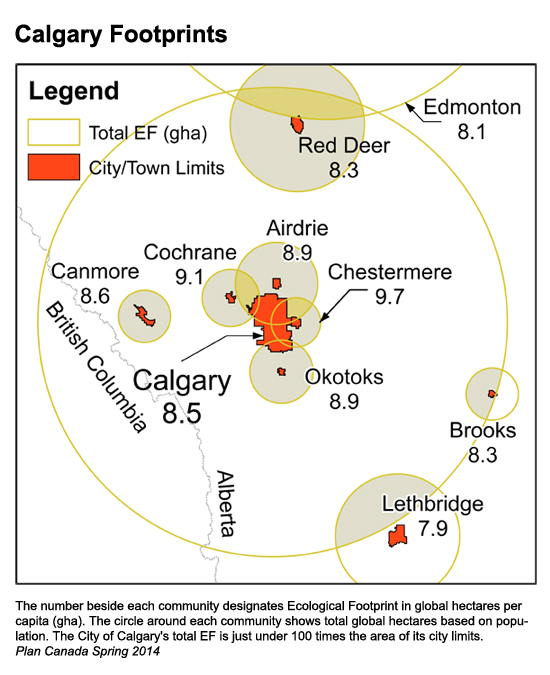
]]>In 2005, Calgary participated in one of the first Ecological Footprint studies focused at the municipal level, in collaboration with Global Footprint Network. The analysis found that Calgary’s per capita Footprint exceeded the Canadian average by more than 30 percent, at 9.8 global hectares per person. If everyone on earth had the same Ecological Footprint as the average Calgary resident, we would need five Earths to maintain that level of resource consumption.
As a result, reducing Calgary’s Ecological Footprint was selected as one of 114 targets that were set as part of imagineCALGARY, the City of Calgary’s 100-year sustainability vision. Calgary aims to reduce its Footprint to the national average of 7.25 global hectares per person by 2036.
To date, Calgary has applied Ecological Footprint analysis to the development of 14 land-use plans, including a proposed downtown redevelopment plan, which compared four development scenarios. Calgary’s Ecological Footprint analysis demonstrated that mobility is the greatest challenge and highlighted the need for a multi-modal transportation system and improved jobs-to-housing balance to reduce the Ecological Footprint.
“Footprint analysis is an effective tool to help those involved in preparing plans to communicate the link between local awareness and global impact and strengthens Calgary’s ability to make the connection between policy commitments and sustainable development.”
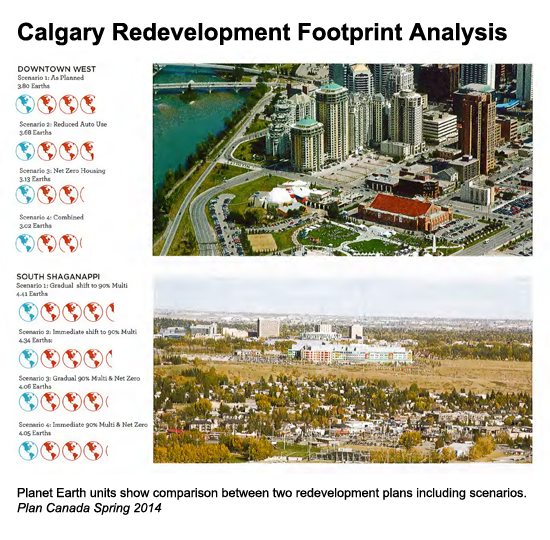
In 2011, the city of Calgary adopted the Calgary Community Greenhouse Gas Reduction Plan, which commits the city to parallel greenhouse gas reduction targets at the community level. The plan identifies actions to reduce city-wide emissions from buildings, transportation, and waste.
Other work highlighting Calgary’s use of the Ecological Footprint as a tool to assess environment performance includes:
• The development of a personal Ecological Footprint calculator for Calgary residents, created in collaboration with Global Footprint Network.
• A collaborative roundtable discussion and a concluding report titled “Charting Calgary’s Low-Carbon Future Outcomes” (2009).
• Reporting on Ecological Footprint metrics in the city of Calgary’s State of Environment Report (1998 – 2010).
• Reporting on Ecological Footprint metrics in the imagineCALGARY Report on the Natural Environment (2014), which was used as an engagement tool to generate priority indicators for the natural environment.
• Reporting on Calgary’s approach for incorporating Ecological Footprint into land-use planning decision-making in various journals, presentations and articles.
Additional Resources
How green is your city: towards an index of urban sustainability, The Conversation, 2015.
“How Many Planets?” Plan Canada, Spring 2014, by Les Kuzyk, Planning Analyst, and Matt Rockley, City Planner, City of Calgary.
“Ecological Footprint and Land Use Scenarios,” Calgary, Canada, by City of Calgary Land Use Planning & Policy.
Toward a Preferred Future: Understanding Calgary’s Ecological Footprint, The City of Calgary, 2007.
“The ecological footprint housing component: A geographic information system analysis,” Ecological Indicators, May 2012, by Les Kuzyk, Planning Analyst, City of Calgary.
“Ecological and carbon footprint by consumption and income in GIS: down to a census village scale,” Local Environment: The International Journal of Justice and Sustainability, November 2011, by Les Kuzyk, Planning Analyst, City of Calgary.
The post Calgary appeared first on Global Footprint Network.
]]>The post Ecuador appeared first on Global Footprint Network.
]]>That is why, in 2009, Ecuador launched a program to keep its country in the “ecological black.” A joint research project of the Ministry of the Environment and Global Footprint Network concluded that national demand for ecological resources and services is increasing over time. They also found that Ecuador’s predominant role is as an exporter of biocapacity to nations that have biocapacity deficits.
“We asked, in guaranteeing the rights of Mother Earth, what would be the most comprehensive indicators we could have? The Ecological Footprint brings together multiple factors that support preserving natural wealth and recognize the impacts that consumption and development patterns have on different areas.”
The country has adopted a Presidential mandate to manage ecological assets by developing physical indicators such as the Footprint to track ecological supply and demand, and inform sound long-term decision-making.
Videos
Watch a video of Global Footprint Network President Mathis Wackernagel talking in Spanish about the Ecological Footprint (la Huella Ecológica) during his September 2012 trip to Ecuador:
Additional Resources
Presidente de Global Footprint Network visitó el MAE, Ecuador Ministry of the Environment (Spanish).
 Reporte de la Huella Ecológica Ecuador, 2013.
The post Ecuador appeared first on Global Footprint Network.
]]>The post San Francisco appeared first on Global Footprint Network.
]]>With urban design and infrastructure having a major influence on its residents’ Ecological Footprints, the goal of the project was to expand the thinking and knowledge around urban living and sustainability. The completed Footprint study found that the average San Franciscan’s overall Ecological Footprint was about 6 percent higher than the average American’s. The study revealed one of the paradoxes of Footprint trends in modern cities: While density and public transportation options significantly reduce per capita Footprint, the increased affluence of city residents correlates with increased consumption. A $1,000 increase in expenditure is expected, on average, to correlate with a 0.09 gha per capita increase in Ecological Footprint. A 100 people per square mile increase in population density is associated with a 0.06 gha per capita decrease in the Ecological Footprint.
The report showed food and beverage consumption as the biggest contributor to the city’s Footprint. To address this (in part), SPUR launched a program on food systems and urban agriculture.
Additional Resources

Ecological Footprint Analysis: San Francisco—Oakland—Fremont, CA
The post San Francisco appeared first on Global Footprint Network.
]]>