The post Earth Overshoot Day 2024 approaching appeared first on Global Footprint Network.
]]>By comparing the Ecological Footprint with the planet’s biocapacity, it tells us when each year’s Earth Overshoot Day occurs. Falling on August 1st means that humanity is currently using nature 1.7 times faster than our planet’s ecosystems can regenerate. It is like using 1.7 Earths. Overshoot is possible because we can overuse and deplete our natural capital. This compromises humanity’s resource security. The costs of this global ecological overspending are becoming increasingly evident in the form of deforestation, soil erosion, biodiversity loss, and the buildup of carbon dioxide in the atmosphere. The latter leads to climate change, more frequent extreme weather events and lower food production.
Earth Overshoot Day held steady for nearly a decade. It already occurs just after 7 months of the year have passed. The remainder of the year represents the overuse which adds depletion and loss to the biosphere. Even as the date holds steady, the pressure on the planet keeps increasing. This is making the situation ever riskier, since damage from overshoot accumulates over time.
Overshoot will end. The question is how: by design or by disaster. The preferable option is through deliberate efforts.
It takes focus, innovation, and effort to succeed, as athletes have demonstrated in every Olympics. For instance, Jesse Owens, the fastest runner of the 1936 Olympics, powerfully highlighted the menace of racism. Back then, humanity may have used about 0.6 Earths. Dick Fosbury revolutionized the high jump at the 1968 Olympics, when humanity used little under one Earth. By 1988, when Olympian sailor Lawrence Lemieux stopped from his lead position to rescue two capsized competitors, humanity already used 1.3 Earths. In 1992, when the US basketball team won gold, humanity’s demand went down again to 1.2 Earths. In 2008, as Usain Bolt started to break Olympic records, human use had grown to 1.6 Earths. Will we have the resolve to move out of overshoot at record speed?
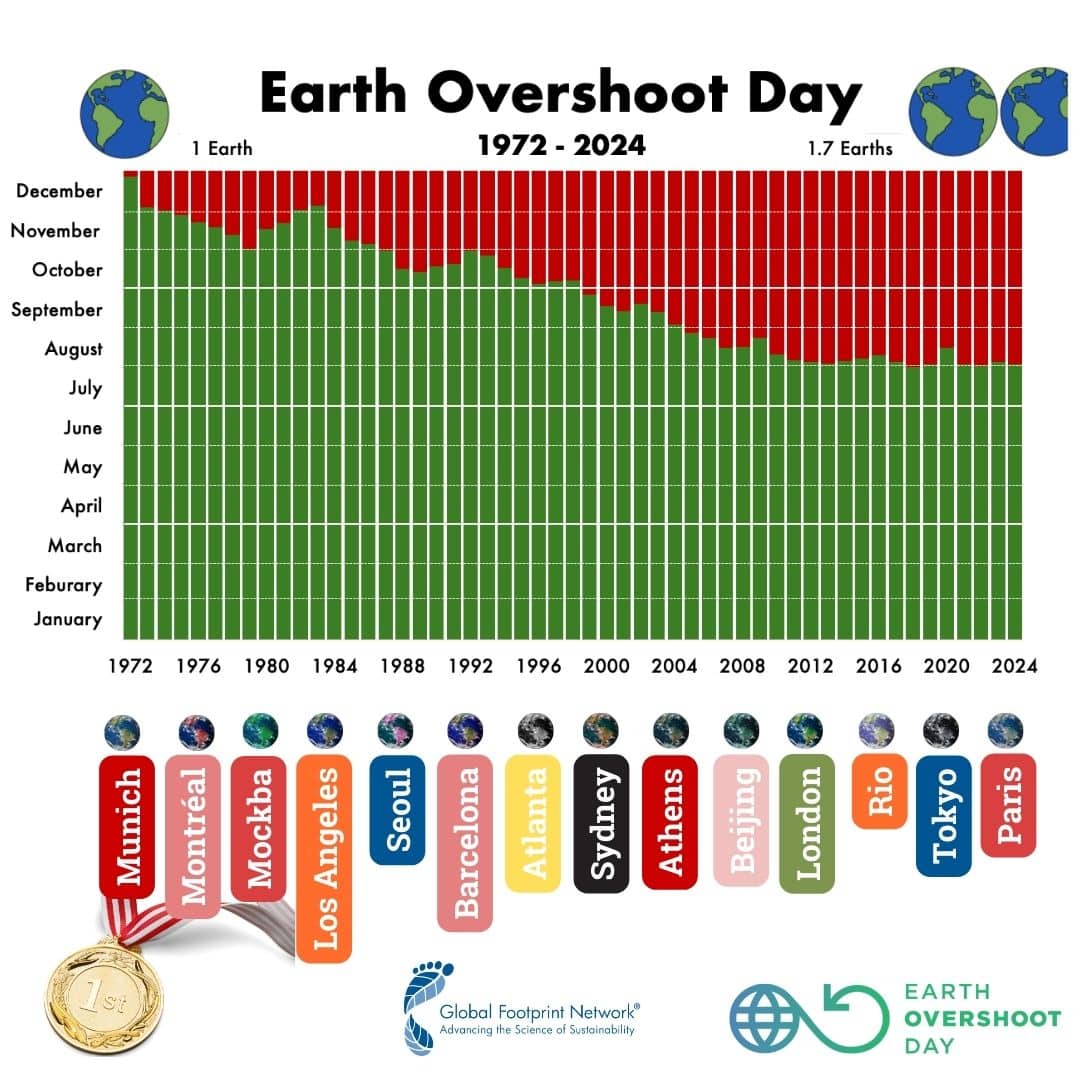
Solutions that #MoveTheDate are available and financially advantageous. Significant opportunities are to be found in five key areas: Cities, Energy, Food, Population, and Planet. The Power of Possibility highlights options that move Earth Overshoot Day. For instance, cutting CO2 emissions from fossil fuel burning by 50% would #MoveTheDate by three months. There are also businesses that #MoveTheDate as they expand. Such businesses may be the ones best positioned to gain value in a future of climate change and resource constraints.
For Media Contact: media@footprintnetwork.org
The post Earth Overshoot Day 2024 approaching appeared first on Global Footprint Network.
]]>The post Global Footprint Network among researchers from the innovative EUSTEPs teaching module recognized for sustainability research with AASHE award appeared first on Global Footprint Network.
]]>GENEVA, SWITZERLAND, DECEMBER 7, 2023 – The Association for the Advancement of Sustainability in Higher Education (AASHE) recently announced article “Teaching sustainability within the context of everyday life: Steps toward achieving the Sustainable Development Goals through the EUSTEPs (Enhancing Universities’ Sustainability Teaching and Practices through Ecological Footprint) Module” as the recipient of the 2023 AASHE Sustainability Award for outstanding research in higher education sustainability. The research – conducted within the context of the EUSTEPs project, funded by the ERASMUS+ programme of the European Union – won in the Campus Sustainability Research Award category.
AASHE bestows its prestigious awards on the institutions and individuals that help lead higher education to a sustainable future. This year, AASHE received 300+ entries resulting in 10 winners announced across five categories. Entries were judged on overall impact, innovation, stakeholder involvement, clarity, and other criteria specific to each category.
Georgios Malandrakis, Associate Professor in Environmental Education at Aristotle University of Thessaloniki and EUSTEPs project coordinator, acknowledges the privilege of working with the dedicated and inspiring project team. “It is a great pleasure to receive the AASHE award. This EU funded project brought together 16 researchers from 4 countries whom were initially almost unknown to each other. Through our research collaboration, we became friends, developed this successful educational module, and managed to engage and educate more than 7,000 university students from nearly 60 countries,” explains Malandrakis.
The EUSTEPs project’s successes are a culmination of three years’ work from passionate project partners. “What impresses me most is the wealth of information captured in the various documents and interactive tools we created to empower students, educators, and HEI administrative staff. It’s rewarding that, in our research findings on the EUSTEPs Module, students found Global Footprint Network’s personal Footprint Calculator to be the most useful educational material to better understand how their daily activities fit into the bigger picture of sustainability,” reflects Director of Mediterranean and MENA Regions at Global Footprint Network, and EUSTEPs research awardee Dr. Alessandro Galli.
“The 2023 AASHE Sustainability Award winners exemplify an unwavering commitment to advancing sustainability within their academic institutions. They are setting new standards and reshaping the landscape of sustainability in higher education,” said AASHE Executive Director Meghan Fay Zahniser.
AASHE held a virtual awards ceremony on Dec. 7 to recognize and celebrate the 10 award recipients. Award recipients receive recognition in various formats, including a plaque from Rivanna Natural Designs, a woman-owned B Corp with a strong commitment to sustainability. To date, 135 higher education institutions and people have been recognized through this prestigious award program since its inception in 2006.
To read more about AASHE’s awards programs, please visit http://www.aashe.org/get-involved/awards/.
Media Contacts
Amanda Diep, Director of Communications
Global Footprint Network
media@footprintnetwork.org
Candi Reddick, Director of Marketing & Communications
Association for the Advancement of Sustainability in Higher Education
(888) 347-9997
creddick@aashe.org
About the Association for the Advancement of Sustainability in Higher Education (AASHE)
AASHE empowers higher education administrators, faculty, staff, and students to be effective change agents and drivers of sustainability innovation. AASHE enables members to translate information into action by offering essential resources and professional development to a diverse, engaged community of sustainability leaders. We work with and for higher education to ensure that our world’s future leaders are motivated and equipped to solve sustainability challenges. For more information, visit www.aashe.org. Follow AASHE on Facebook, Instagram, and X, formerly known as Twitter.
About EUSTEPs
EUSTEPs (Enhancing Universities’ Sustainability Teaching and Practices through Ecological Footprint) is a project carried out, under the leadership of Aristotle University of Thessaloniki, by the strategic partnership between four European universities and non-governmental organisation Global Footprint Network, the official home of the Ecological Footprint methodology and applications. https://www.eusteps.eu/
The post Global Footprint Network among researchers from the innovative EUSTEPs teaching module recognized for sustainability research with AASHE award appeared first on Global Footprint Network.
]]>The post Global Footprint Network participates in sustainable entrepreneurship hackathon appeared first on Global Footprint Network.
]]>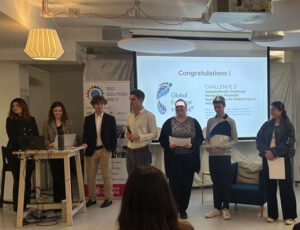 We are grateful for the fresh insights and ideas provided to our organization from the hackathon. More importantly, through our participation in the creative and collaborative event, we hope to have helped nurture emerging talent in the sustainability arena. It was a delightful surprise that the student group working on Global Footprint Network’s challenge won first prize out of five outstanding projects. Kudos to the student teams and organizers of the event and thank you for having us!
The post Global Footprint Network participates in sustainable entrepreneurship hackathon appeared first on Global Footprint Network.
]]>The post The Fish Game and other fun online educational resources appeared first on Global Footprint Network.
]]>
Are you sheltering-and-educating-in-place due to COVID-19? We know this can be a challenging time trying to keep our lives together while, quite literally, saving the world from the confines of our homes. We recognize the need for free online educational resources for students or inquisitive adults alike, and are happy to share a handful of our favorite Footprint and sustainability resources.
- The Fish Game
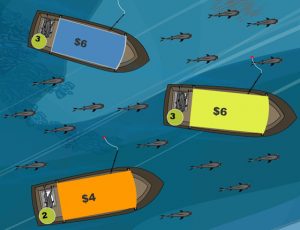
You have 10 days to catch as many fish as you can. The money you make from these fish will need to support your family for the next month. Each fish nets $2. The Fish Game, created by the Cloud Institute for Sustainability Education, helps kids and adults better understand resource constraints and sustainability. Play the game online and find out how to make the most out of your resources! - Contest to guess the date of Earth Overshoot Day 2020
Initially set up as a competition for classrooms, this contest is now open to individual students and their families. There’s a lesson plan and a couple of helpful hints to help participants come up with their best guess for the date of Earth Overshoot Day this year. - The World’s Largest Lesson – Understanding Sustainable Living
This lesson was developed for ages 11-14 to address the Sustainable Development Goal #12, Responsible Consumption and Production. The lesson plan features the Footprint Calculator and profiles of four children around the world for class (or living room) discussion. - Footprint Futures Module
Footprint Futures is a university-level teaching module for exploring the sustainability challenge facing human economies. The module consists of a student-driven exploration into what the optimal scale of material demand is for a national economy, using real country examples. More specifically, it asks: What would be a given country’s optimal Footprint compared to the country’s biocapacity by 2050? - Videos
Watch a video about the Ecological Footprint, climate change, natural resources, and more. Our curated collection features a TEDx talk, Bill Nye, Concerned Kittens, and National Geographic Kids.
Want even more ideas? Check out our educational resources page!
The post The Fish Game and other fun online educational resources appeared first on Global Footprint Network.
]]>The post Le Jour du Dépassement de la France tombe le 5 mai appeared first on Global Footprint Network.
]]>Le Jour du Dépassement Planétaire est la date à laquelle la demande annuelle de l’humanité sur la nature (Empreinte Écologique) dépasse la capacité de la Terre à régénérer des ressources naturelles sur l’année entière (biocapacité).
« En 2018, si toute l’humanité consommait comme les Français, elle aurait exploité l’équivalent des capacités de régénération de 2,9 Terre. Un résultat bien au-dessus de la moyenne planétaire qui évolue ces dernières années autour de 1,7 Terre. Et bien entendu, très éloigné du niveau soutenable à l’échelle de notre seule planète, » indique le rapport « L’Autre Déficit de la France » produit par WWF France en partenariat avec Global Footprint Network et publié aujourd’hui.
Le Jour du Dépassement de la France est calculé en élargissant l’Empreinte Écologique des Français à l’échelle de la population mondiale, puis en la comparant à la biocapacité planétaire. Logement, transport et alimentation constituent plus des deux tiers de l’Empreinte Écologique des Français. Les autres biens et services (activités culturelles et de loisirs, télécommunications, services financiers et assurances…) constituent le tiers restant. Le rapport préconise des stratégies de politiques publiques adaptées.
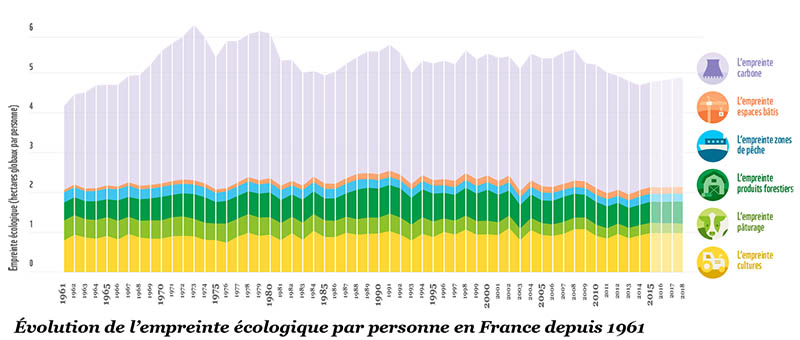
De la même manière, le calculateur d’Empreinte Écologique individuelle de Global Footprint Network, disponible en version française dès aujourd’hui, élargit cette Empreinte individuelle à l’échelle de la population mondiale, puis la compare à la biocapacité planétaire pour révéler la date du Jour du Dépassement Personnel.
L’Empreinte Écologique d’une personne mesure la quantité de surface productive requise pour fournir tout ce que cette personne utilise, y compris nourriture, fibres et bois, infrastructures urbaines et absorption de leurs émissions de dioxyde de carbone liées à sa consommation d’énergies fossiles. Elle est calculée grâce à un questionnaire détaillé.
La date du Jour du Dépassement Personnel indique quand serait le Jour du Dépassement Planétaire si l’humanité entière menait le même style de vie que l’utilisateur. En 2017, le Jour du Dépassement Planétaire est intervenu le 2 août, donc un Jour du Dépassement Personnel antérieur au 2 août signifie que la demande de l’utilisateur sur la nature est supérieure à la moyenne mondiale ; antérieur au 5 mai, et sa demande est supérieure à celle d’un Français moyen; au 14 mars, et elle est supérieure à celle d’un Américain moyen; au 20 décembre, et elle est supérieure à celle d’un Vietnamien moyen.
Le Jour du Dépassement Planétaire avance un peu plus dans le calendrier presque chaque année depuis que l’humanité a commencé à creuser son déficit écologique au début des années 1970. Les coûts du déficit écologique mondial sont de plus en plus évidents dans le monde comme en atteste l’endommagement du capital naturel sous forme de déforestation, d’érosion des sols, d’appauvrissement de la biodiversité, ou encore d’accumulation de carbone dans l’atmosphère.
« Notre planète est limitée, mais les possibilités humaines ne le sont pas. Vivre selon les moyens que nous accordent notre planète est technologiquement possible, financièrement bénéfique et notre seule chance pour un avenir prospère, » a déclaré Mathis Wackernagel, PDG de Global Footprint Network et co-créateur de l’Empreinte Écologique. « Nous espérons que notre nouveau calculateur d’Empreinte permettra à des millions de personnes à travers le monde d’explorer des solutions de durabilité, et de trouver une inspiration dans le champ des possibles qui s’offre à notre société contemporaine. »
Ludique et mobile, le calculateur d’Empreinte ne se contente pas d’évaluer l’impact des utilisateurs sur la planète et sur les émissions de carbone. Il les invite à contribuer à faire reculer la date (#movethedate) du Jour du Dépassement Planétaire en prenant en charge la gestion de leur Empreinte Écologique individuelle, suggère des solutions de durabilité et invite à les partager sur les médias sociaux.
Plus de 1 million de personnes dans le monde, dont une large proportion d’étudiants et d’éducateurs, ont utilisé le calculateur d’Empreinte de Global Footprint Network depuis le lancement de la nouvelle version le 2 août dernier.
Le calculateur est basé sur les dernières données et méthodologie de Global Footprint Network, qui tient la comptabilité précise de l’utilisation et de la capacité de régénération de ressources écologiques de plus de 200 pays et régions de 1961 à nos jours. Ces comptes de ressources s’appuient sur les données des Nations Unies. Les résultats sont disponibles en ligne sur la plate-forme ouverte de données Ecological Footprint Explorer data.footprintentwork.org.
Pour en savoir plus
Lisez le rapport : https://www.footprintnetwork.org/content/uploads/2018/05/2018_lautre_deficit_de_la_france.pdf.
Calculez votre Empreinte Écologique individuelle sur www.footprintcalculator.org/fr.
Suivez #movethedate sur les réseaux sociaux.
Les données d’Empreinte Écologique des pays du monde entier sont disponibles sur la plateforme ouverte de données Footprint Explorer: data.footprintnetwork.org.
À propos de Global Footprint Network
Global Footprint Network modifie la façon dont le monde gère ses ressources naturelles, à travers
- des indicateurs qui sont simples, pertinents et adaptables à diverses échelles;
- des informations utiles sur la consommation et la disponibilité des ressources naturelles; et
- des outils et des analyses pour guider la prise de décision.
Contacts presse:
Laetitia Mailhes (francophone)
Media & Outreach
Global Footprint Network
+1 415 794 2882 (Californie, PDT = GMT-7h)
laetitia.mailhes@footprintnetwork.org
Ronna Kelly (anglophone) – California, United States
Director, Marketing & Communications
Global Footprint Network
+1 510 834-2563 (Californie, PDT = GMT-7h)
ronna.kelly@footprintnetwork.org
The post Le Jour du Dépassement de la France tombe le 5 mai appeared first on Global Footprint Network.
]]>The post Join us at two California Universities for Turning Green’s College Road Tour appeared first on Global Footprint Network.
]]>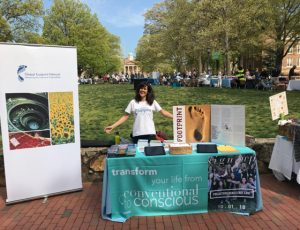 We are so excited to join Turning Green’s College Road Tour at two universities in California! Don’t miss this tabling exhibition that features sustainable lifestyle themes (Footprint, food, fashion, body, zero waste, clean, living space) and ethical samples. Stop by our table to learn more about your Footprint and how you can help #movethedate of Earth Overshoot Day.
April 26 – University of California, Santa Cruz
May 2 – University of California, Davis
The post Join us at two California Universities for Turning Green’s College Road Tour appeared first on Global Footprint Network.
]]>The post Footprint Calculator is an eye opener – Project Green Challenge Winner appeared first on Global Footprint Network.
]]>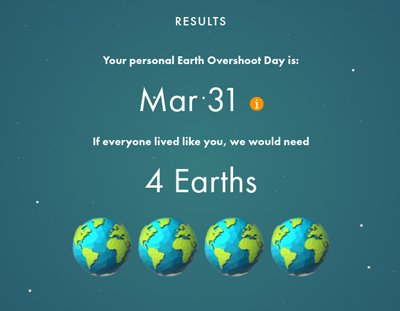 What is my Ecological Footprint? How do I measure it? These questions were answered when I was introduced to Global Footprint Network’s Footprint Calculator. The Calculator illustrated how much nature I use by showing me the number of Earths we would need if everyone lived like me. It was an eye opening experience! I could not believe more than one Earth would be needed, let alone the four that were shown as my result.
The Calculator helped me evaluate my lifestyle and discover how the choices I make impact the Earth. Where my family’s food comes from and where we buy it has the largest effect on my Ecological Footprint. Oftentimes, my family chooses to shop conveniently rather than buying local. The Calculator’s tangible solutions made me realize I could reduce my Footprint by encouraging my family to buy locally, whenever possible. We are now trying to switch from buying conventional meat to shopping at a local butcher and buy local dairy products, specifically milk. My goal is that we will reduce our meat consumption, which will lower our family’s Ecological Footprint.
After using the Calculator and learning that energy was my second largest category, I knew I needed to make some changes. I never fully realized how much I depended on cars as a means of transportation. Now, I am inspired to walk, use public transit, and carpool more often. I plan to use these transportation options instead of driving, whenever possible. Especially in the warmer months, I would love to bicycle to my friends’ houses and to my recreational activities. I will also continue to carpool to my field hockey practices. Another significant aspect of my energy use is electricity. I plan to evaluate the light bulbs in my house and change them to LED bulbs. Switching to LEDs and limiting the amount I drive will reduce my energy usage.
Global Footprint Network’s Footprint Calculator was easy to use and gave me simple, tangible solutions to reduce my Footprint on the Earth. After answering the questions on the Calculator and evaluating my results, I am committed to reducing the resources I use and making lifestyle changes to decrease my Footprint. This tool was an eye opener for me and I hope it can be the same for others. Now it is time to ask yourself…what is your Ecological Footprint?
 Bridget is a high school student in Alexandria, VA. She was a Project Green Challenge (PGC) 2017 Finalist, and is now serving on Turning Green’s PGC and Conscious College Road Tour Student Advisory Board Committees. Bridget was a founding member of the Watershed Warriors Initiative, a school club and now non-profit that educates elementary school students on environmental issues. She is involved in many activities at her school, including the Superintendent’s Student Leadership Committee, the varsity field hockey team, and the National English Honor Society (NEHS).
The post Footprint Calculator is an eye opener – Project Green Challenge Winner appeared first on Global Footprint Network.
]]>The post Olympics Data Story: North & South Korea appeared first on Global Footprint Network.
]]>As the PyeongChang Olympics come to a close, we thought it would be interesting to explore the Ecological Footprints and biocapacities of North and South Korea.
Watch the latest installment of our Data Stories series. And please subscribe to our YouTube channel! Help us reach 1,000 subscribers now!
The post Olympics Data Story: North & South Korea appeared first on Global Footprint Network.
]]>The post Data Stories: Ecuador appeared first on Global Footprint Network.
]]>Ecuador is near and dear to the heart of Laurel Hanscom, our program director. She served there in the Peace Corps. It’s also on the cutting edge of environmental policy—it was the first country to recognize the rights of nature in its constitution.
Learn more about how Ecuador used the Ecological Footprint in our new Data Stories video above.
And please subscribe to our YouTube channel! Help us reach 1,000 subscribers now!
The post Data Stories: Ecuador appeared first on Global Footprint Network.
]]>The post Be Good to the Environment in 2018 appeared first on Global Footprint Network.
]]>The post Be Good to the Environment in 2018 appeared first on Global Footprint Network.
]]>