The post Country Overshoot Days 2026 appeared first on Global Footprint Network.
]]>To explore its meaning, Mathis Wackernagel was interviewed by Population Connection, and below is an excerpt of the full interview.
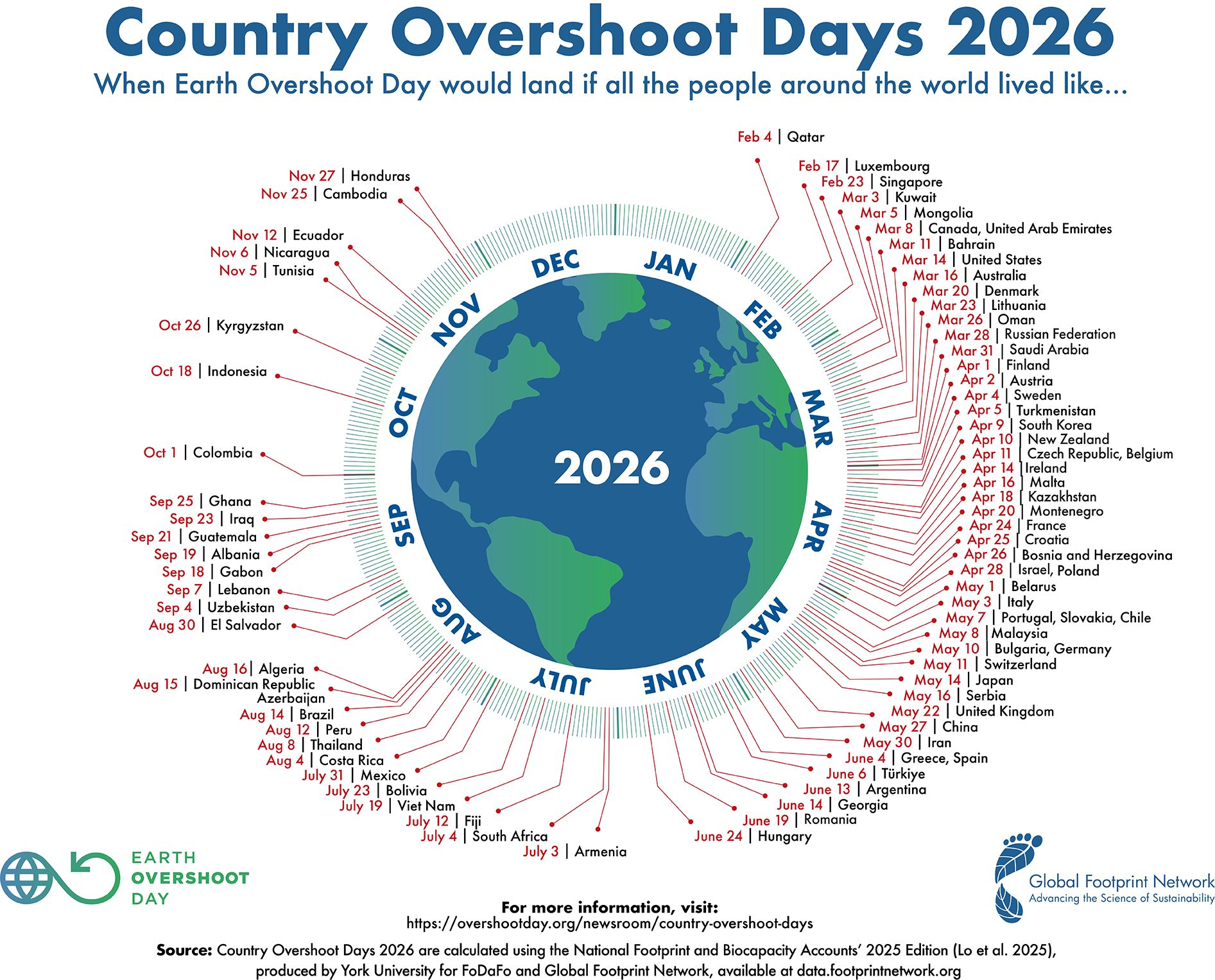
Population Connection: Can you explain what a Country Overshoot Day is and how it’s calculated?
Mathis: A Country Overshoot Day is the date when humanity would have exhausted what Earth can renew in the entire year, if everyone lived like people in that country. So, it’s really asking: how many Earths would we need if the world lived like us?
We calculate it by comparing a country’s Ecological Footprint per person, or how much nature people use, with how much the planet can regenerate per person. This ratio then can be translated into time. For instance, if a country’s per person demand was threefold of what the planet can regenerate per person, then it would take one third of a year to exhaust the yearly budget.
Also, we focus on the mother of all resources: biocapacity or the ability of ecosystems to renew. This limits everything: how much food and fibers we can get, how much CO2 can be absorbed (which limits our fossil fuel use), and how much we can mine (because the amount of nature it takes to access the minerals is more limiting than the underground minerals).
Population Connection: Why are Overshoot Days such a powerful way to communicate sustainability challenges, compared to traditional indicators like emissions or GDP?
Mathis: Because everyone understands a deadline on a calendar. Saying we’ve already spent this year’s ecological budget by March lands very differently than talking about abstract percentages or tons of emissions.
It also connects our economies to physical limits. GDP can grow for a while even when we are depleting natural capital, but Overshoot Days show whether our economies are operating within ecological means or undermining our prospects. It reframes sustainability from being about sacrifice to being about long-term viability.
Population Connection: The 2026 Country Overshoot Days highlight stark differences. For instance, Qatar overshoots on February 4, while lower-income countries like Bangladesh or Nigeria have no Overshoot Day. What do these extremes reveal?
Mathis: It shows just how unequal global resource use is. Early overshoot usually reflects very high per-person consumption: energy, materials, and carbon. Countries without an Overshoot Day are using less than what global ecosystems can regenerate per person.
But that doesn’t mean life is easy there. Often it means people lack access to energy and services. But this points to the essence of what we are after. If countries are not putting resource security at the core of their economic development strategies, they are in our view on a self-imposed suicidal path, and again here we think of the regenerative resources primarily.
Resource security is at the center of producing lasting human wellbeing. And it is the latter that is the ultimate goal.
Population Connection: Looking at the latest country results, what patterns stand out — and are there any trends that worry you or give you cautious optimism?
Mathis: Most high-income countries overshoot early.
The good news is that some countries are starting to recognize that waiting for others is self-defeating. They are bending their resource curves through cleaner energy, efficiency, and smarter cities. The not-so-good news is that globally, we’re still moving deeper into overshoot; progress just isn’t fast enough yet.
Population Connection: You mentioned Ecological Deficit Days in the release. What are they, and why should we pay attention to them?
Mathis: Ecological Deficit Days mark when a country has used more than its own ecosystems can regenerate in a year. After that point, it’s living off imports, depleting its natural capital, or exporting waste like CO₂ to the global commons.
That’s not just an environmental issue. It’s an economic risk. Countries running persistent deficits are more exposed to supply disruptions and rising resource costs. Overshoot Days show whether the country’s development model is globally replicable. The Deficit Days show whether countries, in net terms, are resource sinks or resource providers.
Population Connection: How urgent is course correction?
Mathis: Those days tell us we’re using nature faster than it can renew — and that’s not a recipe for long-term stability.
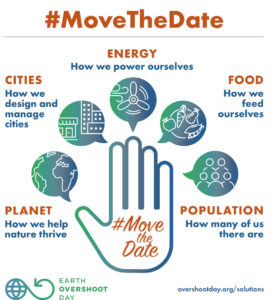
But they also tell us overshoot is the result of human choices, not fate. Change the energy system, food system, and city design, and the date moves. The sooner we act, the more room we have to maneuver.
And the most important thing they tell us, and the fewest hear, is that we are not stuck with conflicting incentives. Not to prepare oneself for the inevitable future of climate disruption and resource constraints is just plainly self-defeating. To understand this, we do not need to go to climate COP meetings. Actually, going there may give us the impression that we are powerless and need to wait for everyone else first, and that is just a false reading of the current situation.
Population Connection: How can countries move their Overshoot Days later in the year? What role can civil society organizations like Global Footprint Network and Population Connection play?
Mathis: There are some big, proven levers: switch to clean energy, design compact and efficient cities, reduce food waste, eat lower on the food chain, and invest in healthy ecosystems. Many of these changes also improve quality of life. We call them the power of possibility.
Civil society organizations are also contributing. For instance, by helping to turn data into action, supporting smart policies, engaging communities, and keeping the focus on responses that actually move the date.
Population Connection: Finally, if you could send one key message to readers about Country Overshoot and Deficit Days, what would it be?
Mathis: Overshoot is not a verdict — it’s a measurement. And what gets measured can be managed more effectively. We already know how to move the date, and many of the solutions make societies healthier, more resilient, and asset rich. The real question is how quickly we choose to implement them at scale. Waiting is the dumbest, most costly, and most self-defeating strategy.
The post Country Overshoot Days 2026 appeared first on Global Footprint Network.
]]>The post Japan’s New Corporate Compass appeared first on Global Footprint Network.
]]>For decades, Japan has been a quiet pioneer in measuring humanity’s demand on our planet, using the power of Ecological Footprint accounting. Now, that foundational work is moving decisively from national statistics into the heart of corporate strategy. A new wave of Japanese businesses is adopting Footprinting for businesses. In the process, they discover a clearer, more actionable path to true sustainability.
Beyond Carbon: Seeing the Whole Picture
While carbon emissions dominate the climate conversation, a company’s impact on nature is multidimensional. It involves water, forests, fisheries, and fertile land. The Ecological Footprint synthesizes all demands that compete for nature into a single, understandable unit: global hectares (gha). It answers a foundational question: Because of this company’s existence, how much does this company contribute (or detract from) ecological overshoot?
This holistic view is becoming a corporate superpower. Unlike a carbon-only lens, Ecological Footprints reveal the structure of a company’s relationship with nature. It shows where in the supply chain the pressure points lie: is it in raw material sourcing, manufacturing, or product use? Is the product dependent on resource flow to operate? What does it displace? This makes it an indispensable tool for:
- Strategic Planning: Informing decisions that decouple growth from ecological impact.
- Supply-Chain Resilience: Identifying hidden dependencies on fragile ecosystems.
- TNFD & ESG Disclosure: Providing robust, science-based data for mandatory and voluntary nature-related reporting.
By aligning operations with the core Ecological Footprint principle of ecological regeneration, companies aren’t just reducing harm, they’re designing business models that not only help humanity operate within Earth’s budget, but also generate strategic advantages for the business.
The Policy Catalyst: Japan’s Nature-Positive Turn
Why is this accelerating now in Japan? The shift has been catalyzed at the highest level.
In 2023, the Japanese government formally embedded the Ecological Footprint into its National Biodiversity Strategy (2023-2030), recognizing it as a key indicator for monitoring corporate impacts on ecosystem services. The Ministry of the Environment actively promotes Ecological Footprint in its TNFD guidance workshops. Maybe this was also encouraged by co-founder Mathis Wackernagel, and his PhD advisor Bill Rees, receiving the Blue Planet Prize from the Asahi Glass Foundation in 2012.
The message to the private sector is clear: understanding your full ecological footprint is no longer a niche exercise—it’s integral to Japan’s transition to a nature-positive economy. This policy signal has turned interest into action, creating fertile ground for Business Footprinting to take root.
From Early Adopters to Mainstream Momentum
The track record in Japan is growing, built on strong partnerships. Global Footprint Network, alongside its dedicated Japanese partners Ecological Footprint Japan (EFJ) and IDEA Consultants, Inc., has been at the forefront of this corporate journey.
The path was blazed by forward-thinking companies like Kao Corporation (2012) and Daiichi Sankyo Group (2016). Today, the movement is gaining powerful momentum. Industry leaders are now publicly integrating Ecological Footprint into their core sustainability vision:
- Fujitsu (with IDEA, 2024) is using Ecological Footprint to advance its vision for a sustainable world.
- Alps Alpine (with EFJ, 2025) is applying it to explore “coexistence with nature”.
These aren’t just one-off reports; they are deep strategic explorations into how a company can thrive by respecting planetary boundaries.
The Researcher at the Heart of the Movement: Meet Katsu
Behind this growing momentum is a network of dedicated experts. In Japan, a central figure is Katsunori Iha (Katsu), Global Footprint Network’s lead researcher and specialist in MRIO applications, based in the country. Katsu is more than an analyst; he is a crucial bridge between the global Ecological Footprint methodology and its practical, impactful application in the Japanese business context.
He works closely with partners at EFJ and IDEA, providing the scientific backbone, clarifying complex data, and ensuring that every Business Footprint assessment is both rigorous and relevant. When a company like Alps Alpine or Fujitsu asks, “What does this mean for our specific supply chain?” Katsu helps translate the numbers into strategic insight. His role is pivotal in ensuring that Japan’s corporate adoption of Ecological Footprint is built on a foundation of scientific integrity and local understanding.
The Road Ahead: A Model for the World
Japan’s expanding practice of Business Footprinting marks a new phase for the metric itself, from a macro indicator to a micro decision-making tool. It’s opening new applications, inspiring nature-positive business models, and proving its value in the TNFD era.
As the steward of the Ecological Footprint methodology, Global Footprint Network supports this global evolution through fostering collaboration worldwide. To make the National Footprint & Biocapacity Accounts, independent and well governed, it set up an organization dedicated to those accounts: FoDaFo. FoDaFo now works with York University to produce and advance these accounts.
The experience being gained in Japan, spearheaded by local partners and experts like Katsunori Iha, is a valuable blueprint for other regions.
The compass for companies that want to stay relevant points to nature. For companies ready to navigate the transition to becoming future-proof, Business Footprinting provides the map.
Find out more:
Is your organization ready to explore its Ecological Footprint?
Global Footprint Network and its partners welcome you to join this growing movement. Contact us to discover how Business Footprinting can illuminate your path to resilience and longevity. For more information, contact Katsunori Iha (Katsu).
Inspired by Japan’s two-decade journey with the Ecological Footprint. Learn more about the history here: Two Decades of Ecological Footprinting in Japan
The post Japan’s New Corporate Compass appeared first on Global Footprint Network.
]]>The post Breaking Bread, Building Futures appeared first on Global Footprint Network.
]]>What if tackling climate change started with sharing a meal?
Or at least the idea of one?
That was the spirit behind Breaking Bread, Building Futures, an online event co-organised by Area Europa and Global Footprint Network as part of The Food Odyssey project.
Held on 16 October 2025, to celebrate World Food Day, the webinar brought together European initiatives working at the intersection of food, climate, and education.
Featured as a European Climate Pact Satellite Event, an Erasmus Days event, and included on the FAO interactive World Food Day map and on the Education for Climate platform, the session gathered two dozen participants online for one shared purpose: to learn, exchange, and imagine together how education can empower communities to act for a sustainable food future.
A table set for collaboration
“By breaking bread together in this virtual space, we aim to connect projects, spark new synergies, share good practices, and explore how education can empower communities to act,” explained Giulia Lombardo Pijola, president of Area Europa, who hosted the meeting.
Check out the short presentations that set the stage, followed by an open discussion, a recipe for shared insight and new alliances.
 Who joined the table
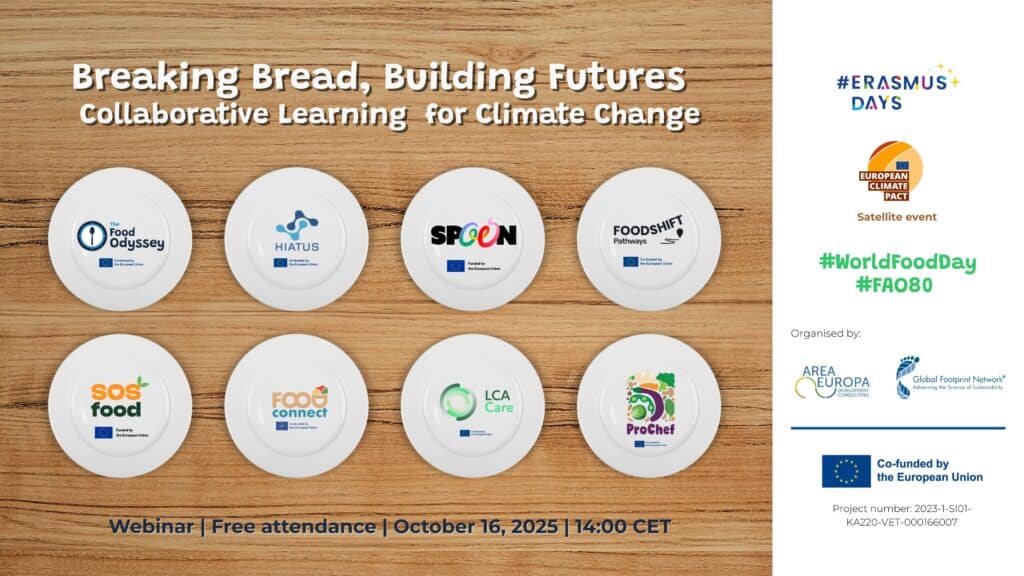
The host: The Food Odyssey – an Erasmus+ KA2 VET education project that combines storytelling, play, and innovation to teach about sustainable food systems through game-based learning.
SPOON – a Horizon project connecting citizens, researchers, industries, civil society organisations, and policymakers to co-create a fairer, healthier, and more sustainable food future.
FOODSHIFT Pathways – an Erasmus+ KA2 School Education project helping schools drive food system transformation through creative STEAM learning and real-world action.
SOSFood Project – a Horizon project working to make our food systems more sustainable and secure, harnessing the potential of Artificial Intelligence technologies.
HIATUS – an Erasmus+ KA2 School Education project that implemented the “service design thinking” methodology within schools, in close cooperation with teaching staff.
PROchef project – an Erasmus+ KA2 VET project aimed at enhancing the skills of chefs and kitchen staff in the context of promoting a protein shift in institutional kitchens.
LCA CARE – an Alliances Partnerships for Innovation project, focused on fostering eco-innovation in SMEs within the agri-food sector.
FoodConnect – LIFE programme project designed to address the critical issue of food waste in the Southern EU region
Shared insights from the table
The discussion revealed how diverse approaches to food system transformation can reinforce one another. Three key themes emerged: making complexity tangible through creative learning, harnessing data and technology for systemic change, and building bridges across sectors.
“The Breaking Bread event provided an excellent platform for inspiring projects to exchange best practices and explore opportunities for collaboration — elements that lie at the heart of European projects and are essential for achieving systemic transformation together.”
— Beatrice Meo, Hot or Cool Institute (SPOON Project)
“We aim to reach actors across the entire food value chain and gather data from each step. The use of AI-based technologies and the access to private, underexploited or unused data will allow us to upgrade the decision-making processes and create more efficient, sustainable systems that are fair to everyone.”
— Eloy Miranda García, SOSFood Project
Katerina Riviou, from FOODSHIFT Pathways, surprised the audience by sharing another inspiring initiative, the CLEVERFOOD project, and its travelling “CLEVERFOOD for Everyone” exhibition, which brings the complexity of global food systems to life across Europe.
Perhaps the most powerful thread running through all presentations was the recognition that transformation requires working across boundaries—between sectors, disciplines, and communities.
This collaborative and creative spirit—open, curious, and grounded in shared learning—was exactly what the event celebrated.
Because sharing ideas, like sharing food, brings us closer to building the futures we want.
Missed the session?
You can watch the recording here and explore how education is shaping tomorrow’s food systems.
Want to keep the learning going?
Explore The Food Odyssey’s Teachers’ Toolkit, a set of ready-to-use slide decks designed to help teachers (and anyone curious) learn about sustainability and food systems, and bring these topics into the classroom.
The post Breaking Bread, Building Futures appeared first on Global Footprint Network.
]]>The post Latvia – A Green Giant appeared first on Global Footprint Network.
]]>In this context, Rīgas Meži invited Mathis Wackernagel to keynote its Sustainable Forests Conference held this September in Riga, Latvia’s charming capital. The company, which manages the city’s 61,000 hectares of forest, is leading discussions on how to upgrade forest management so that all ecosystem services can thrive, enhancing both commercial and social value, rather than focusing solely on timber production.
During his visit, Mathis also had a chance to meet other experts, journalists and Latvia’s Parliamentary Commission for Sustainable Development, where he highlighted Latvia’s strategic advantage and the increasing importance of resource security as a key parameter for long-term economic success. This is not only true for low-income populations around the world, but for any economy, as we enter a world of increasing climate disruption and resource constraints.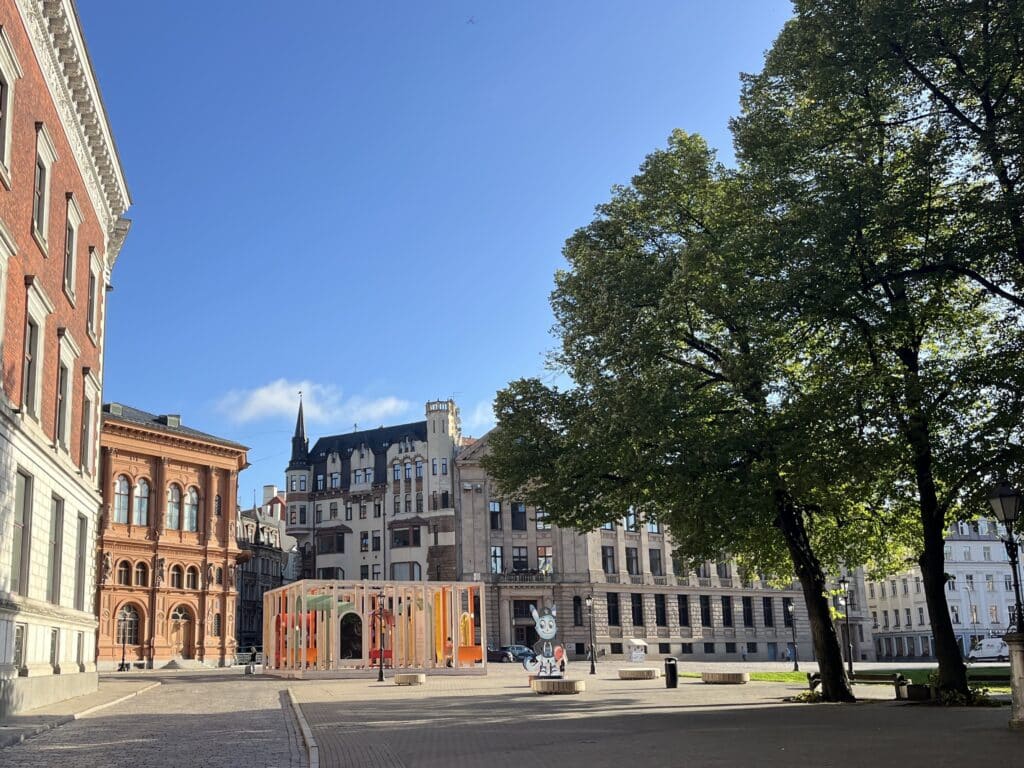
Mathis emphasized that it is in everyone’s interest to address the market failure of ecological overshoot, and that countries with resource reserves, like Latvia, are in a unique position to turn this ecological strength into economic opportunity. He encouraged the Commission to explore how Latvia could best leverage its biocapacity for the benefit of Latvia, in a future increasingly shaped by ecological limits.
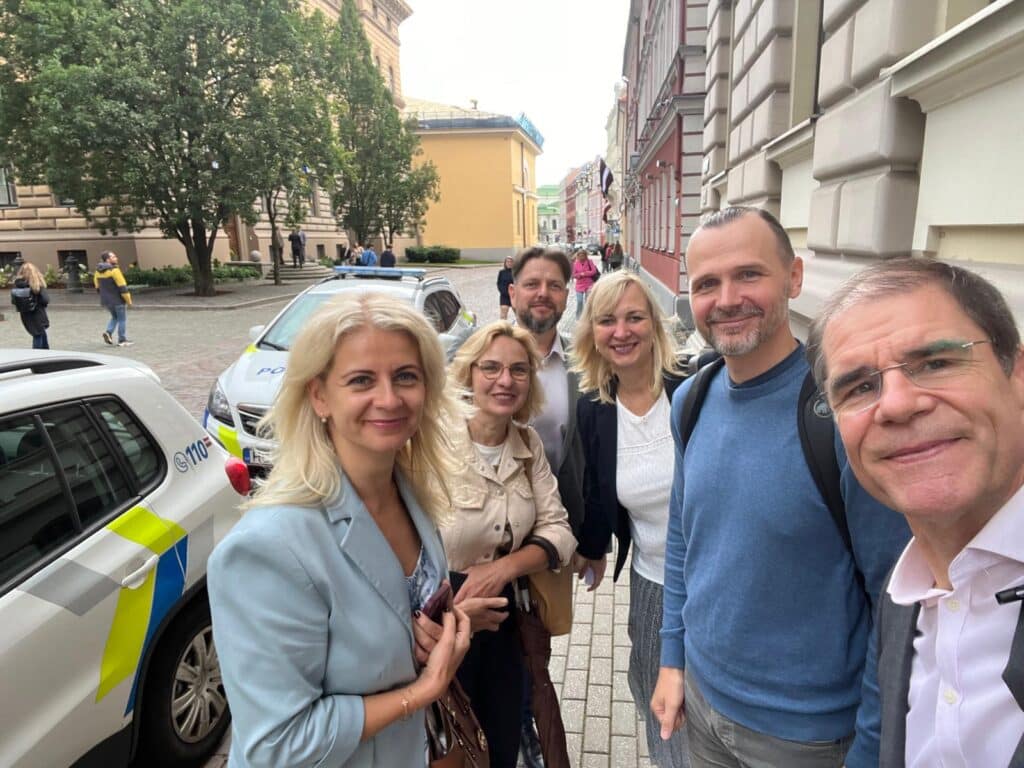
Mathis Wackernagel in Riga with the kind, energetic, and effective “Rigas Mezi” team, including, from left to right, Evita Vītola, Ieva Geistere, Gatis Eriņš, Anita Skudra, and, Jānis Ģērmanis.
Media uptake in Latvia:
Latvian Radio: Program “Zināmais – Nezināmajā”:
What is the “ecological footprint”?
Explained by Swiss sustainability expert and participant of our forest conference, Mathis Wackernagel: Interview with Mariona Baltkalne: Shorter news version, and longer version.
Online news portal for Latvian public media:
If the security of natural resources is not a central issue for a country, it is on a suicidal path. (September 20, 2025). News segment.
V show “Vides Fakti”:
What are the most environmentally friendly forest management methods, and is our understanding changing? Short TV Segment (minute 19:26)
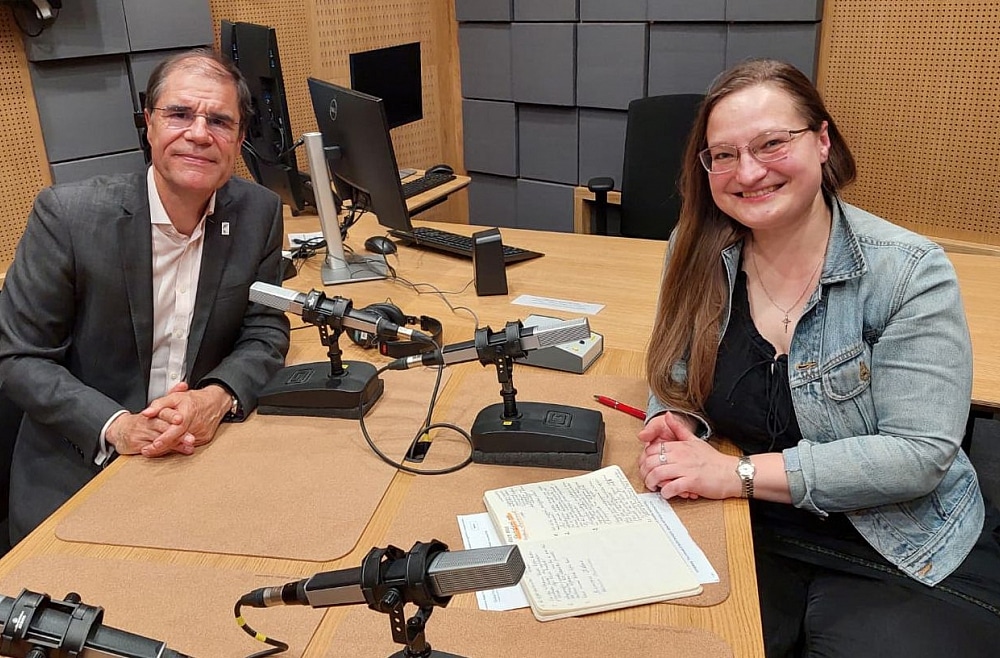
Mariona Baltkalne from Latvian National Radio interviews Mathis Wackernagel
The post Latvia – A Green Giant appeared first on Global Footprint Network.
]]>The post Sustainable Shaper appeared first on Global Footprint Network.
]]>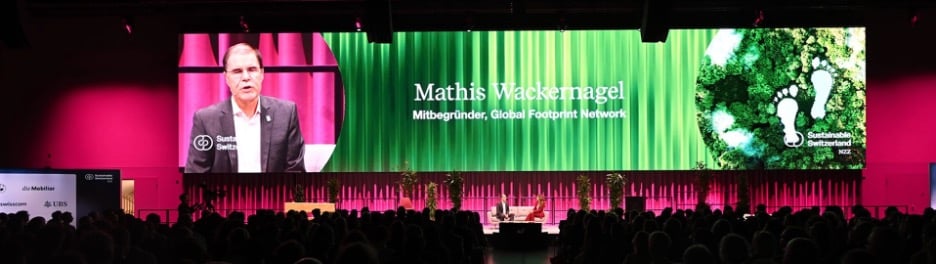
Neue Zürcher Zeitung Interview with Mathis in run-up to the event
Q: On July 24th was Earth Overshoot Day 2025. What does “Overshoot” actually mean – and why does it affect every company?
Mathis Wackernagel: Kodak probably should have asked itself a similar question: What does “digitization” actually mean – and why does it affect every company?
Persistent overshoot makes one thing clear: the future is becoming increasingly predictable. It will be shaped ever more by climate change and resource scarcity. Will your company’s products become more relevant or more obsolete as a result?
Q: What would you say to people who believe their contribution is too small to matter?
MW: If people view their preparation as a “contribution,” they’re most likely already on the wrong track. It becomes more tangible when we recognize our actions as an economic necessity—and invest accordingly. Incidentally, such actions usually bring the greatest benefit to humanity.
Q: Why is now the right time to engage with the future viability of our way of life?
MW: Because we’re already very late in the race. The future is coming at us faster than our sluggish, material world can adapt to it. Continuing to wait instead of effectively aligning our cities, companies, and countries – and thus our way of life – to the predictable future is probably the most inefficient and expensive strategy, if not self-defeating.
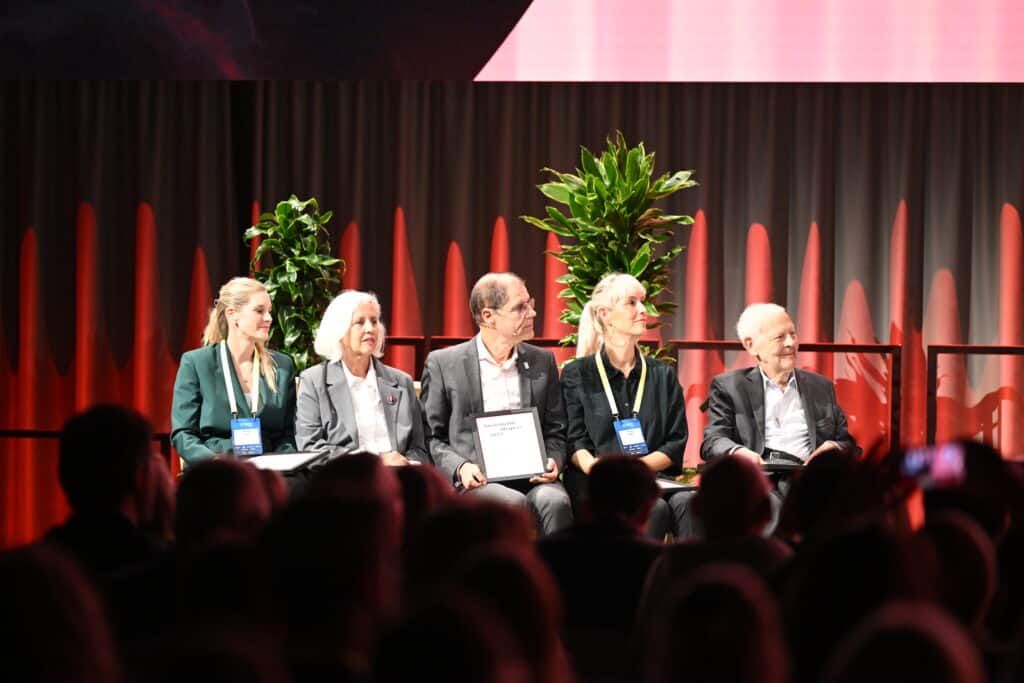
The post Sustainable Shaper appeared first on Global Footprint Network.
]]>The post Stagflation and Overshoot appeared first on Global Footprint Network.
]]>By Mathis Wackernagel
What Is Stagflation and Why Is It Back?
Stagflation, a mix of economic stagnation and inflation, was once thought to be a rare economic glitch. It famously disrupted economies during the oil crises of the 1970s, when energy shortages led to soaring prices, straining economies around the world. Today, stagflation is making a troubling comeback, driven not just by geopolitics alone, but by something deeper and more persistent: ecological overshoot.
Overshoot: The Hidden Engine of Inflation
Overshoot happens when humanity uses more from nature than the Earth can regenerate. Also because of the laws of physics, overshoot will end: ether by design or disaster. Both outcomes lead to economies with smaller resource throughputs.
As these resources become harder to access, prices rise. If our economies are not prepared to operate with lower resource demands, then the price shock will be even more severe. Economists would argue that price elasticities depend on the availability of alternatives, something we increasingly lack.
This rising cost of restocking shelves, physically, the increased effort to “fill the stores,” is experienced as inflation. But this is not inflation caused by too much money; it’s inflation caused by too little nature.
At the same time, overshoot devalues assets that are no longer viable in a climate- and resource-constrained world. Think of coal plants, flood-prone real estate, or outdated transport infrastructure. These “stranded assets” drag down economic vitality, contributing to the stagnation side of stagflation.
Learning from the Past: The 1970s Oil Crisis
The oil shocks of the 1970s offer a useful comparison. Then, as now, economies were caught off guard by their dependence on a finite resource: oil. Inflation soared, productivity stalled, and unemployment rose. But the crisis also sparked innovation: fuel efficiency standards, renewable energy research, and a shift toward less energy-intensive industries.
Whether we fully learned the lesson is debatable. Our dependence on oil remains strong. One indicator is oil’s continued price inelasticity, which illustrates our persistent difficulty in finding substitutes.
Now, we realize our dependence extends beyond oil to the entire spectrum of biocapacity resources. Worse still, we rely on a flow of resources far above what the planet can sustainably provide. This market failure, combined with tight dependency, risks steering us into even more turbulent waters.
Why Today’s Stagflation Is Different
Unlike the oil crisis, today’s resource constraints are not temporary. Climate change, biodiversity loss, and ecosystem degradation are long-term, global challenges. They are not just economic headwinds. They are structural shifts that will shape our future unless we act decisively.
Traditional economic tools like interest rate hikes or stimulus packages miss the mark. To address the root cause, we must confront our overdependence on the planet’s biocapacity.
The Way Forward: Invest in Regeneration
The good news? Stagflation is not inevitable. We can avoid it by shifting our investment priorities. Instead of pouring money into extractive industries, we can invest in regenerative ones. The most powerful are the ones which, when we have more of them, global overshoot declines. Examples include:
- Clean energy that displaces fossil fuel dependency
- Sustainable transportation and higher-density urban living
- Soil and forest ecosystem restoration to rebuild natural capital
- Innovation that enables better lives with fewer resources
These investments not only ease inflationary pressures by improving resource security. They also build long-term economic stability. To help with such analyses, we developed analytics such as NPV+, to more comprehensively assess the net present value of current decisions.
Conclusion: It’s Choice, Not Fate
Ecological overshoot inevitably drives stagflation. This may be the most compelling reason for many decision-makers to treat overshoot as an economic priority. The oil crises of the past showed us that resource scarcity can trigger stagflation, but also that disruption can lead to transformation.
Today, we face a similar crossroads. If we invest wisely and act boldly, we can build an economy that works… because it works with nature, not against it.
The post Stagflation and Overshoot appeared first on Global Footprint Network.
]]>The post The Food Odyssey appeared first on Global Footprint Network.
]]>by Juliana Carvalho
What if your next lesson on climate change started not with a heavy textbook, but with an intriguing story?
What if you could learn about sustainable food systems playfully by escaping a virtual room, unlocking puzzles, and navigating a digital adventure?
Welcome to The Food Odyssey – not just a project, but a fresh sustainability journey.
Co-funded by Erasmus+ program of the European Union and powered by an international team from Slovenia, Italy, Serbia, and Spain, including Global Footprint Network, The Food Odyssey is reimagining how we teach and learn about the future of food. At its heart, it’s an educational initiative that blends innovation, storytelling, and play to tackle one of the most urgent challenges of our time: transforming our food systems in the face of climate change.
Why “Odyssey”?
Because this isn’t a straight path.
Like Homer’s ancient tale, our journey is filled with questions, obstacles, and unexpected turns. The transition toward sustainable food systems demands more than just a few new practices. It requires curiosity, courage, and collaboration. In a world where agriculture contributes significantly to global emissions, and food insecurity remains a pressing global issue, there’s no GPS for where we’re going. But that doesn’t mean we can’t chart a course together.
And just as Odysseus’s journey hinged on hospitality, survival, and food, so does ours. Whether it’s ecological footprints, agroecology, or the power of vocational education, food weaves through every part of the story. Because food is not just fuel. It’s culture, economy, environment, and future.
Our Tools for the Journey
We believe education shouldn’t feel like an old-style lecture. It should feel like an invitation to explore. That’s why The Food Odyssey uses storytelling and game-based learning to empower today’s educators and their students. They will be tomorrow’s food professionals. Here are two of our proudest results so far:
The Training Course for VET Teachers
Hosted on our YouTube channel, this video-based course features:
- Introduction Modules:
- All those 17 learning videos come with subtitles in English, Italian, Serbian, Slovenian, and Spanish
- Designed for Vocational Education and Training (VET) teachers who want to bring new tools and a fresh mindset into their classrooms.
Whether you’re a teacher, policymaker, or lifelong learner, this course gives you the why and the how behind food system transformation.
And Here the Best: The Digital Escape Room
Can a game change the way we think about climate change?
We think so.
Co-created through hands-on workshops and online collaboration, our digital escape room makes complex systems engaging and fun. Players tackle real-world challenges, from carbon footprints to circular agriculture, through interactive storytelling and puzzles. It’s learning that sticks, because it’s learning that moves.
The game will be available in five languages (English, Italian, Serbian, Slovenian, Spanish) and will launch at our final conference. Want to be the first to play?
* – * – * – * – * – * – * – * – *
Join Us: The Final Conference
July 1st, 2025
Ljubljana, Slovenia + Online
We’re bringing together educators, gamers, researchers, and food system thinkers for a unique hybrid event. Expect:
- Thought-provoking panels on climate education, food sustainability, and the role of games in social change
- A chance to play the escape room before anyone else
- Conversations that could shape your next project and inspire new engaging approaches for your teaching practice.
You can register for this free conference here.
Ready to Join the Odyssey?
This is more than a project. It’s an invitation to imagine and help build a food system that sustains both people and planet. Whether you’re a teacher, student, game designer, or policy wonk, we want you on this journey.
Follow our travels and stay up to date on Instagram, Facebook, and LinkedIn and our project website.

The post The Food Odyssey appeared first on Global Footprint Network.
]]>The post Having Coffee with Dr. Jane Muncke appeared first on Global Footprint Network.
]]>
Dear Jane, thank you for your time, and for joining our effort. We are thrilled to having you. As you are entering this new role, we were curious to learn more about your ideas, and also how you would like to shape and contribute to our organization’s mission. To learn more about you, let’s start where it started: What first sparked your interest in environmental protection? Was there a moment when it clicked for you? Maybe even in your childhood?
My parents raised me to appreciate nature and how important it is to protect it. I was born in South Africa and learned from an early age to conserve water. And as a rower I have seen the increase in plastic pollution in rivers and lakes over the years. I feel privileged to have the knowledge that allows me to work on protecting the environment for the benefit of all.
That’s life-experience in action. So what’s a belief you hold that you think more people should consider when thinking about the future of the planet?
We humans are not separate from nature. We are nature! Nature is not a “nice to have” but it is essential for our health, wellbeing and for the future of humanity. And nature is beautiful and fascinating. There are so many miracles to discover in nature. I love planting seeds in spring and observing the life that emerges from them. What a wonder life is!
Indeed, so true. We take these miracles too often for granted. What’s something in your background, professional or personal, that people might be surprised to learn shaped your path here?
During my studies at ETH Zurich in Switzerland I started acting, and founded the first Swiss improvisational theatre group EIT with friends. For 15 years I was an active member of EIT, playing hundreds of shows in Switzerland and abroad. Improvisational theatre can be a lot of fun, but practicing it is mindfulness training because you need to be present in the here and now. These skills help me in my daily life, especially when giving talks or moderating panels and events, and even in meetings. Everyone needs to laugh occasionally, and I like cracking jokes, also if this can be a high-risk undertaking and sometimes gets me in trouble.
How cool is that! Life is constant improvisation. And your penchant for humor so refreshing, particularly for serious missions, like the one of your organization, The Food Packaging Forum, or that of Global Footprint Network. What attracts you to our organization? And how does it relate to your own work?
I’m inspired by Mathis Wackernagel, as a person, a storyteller and as a scientist. His work over several decades shows how powerful data can be. I look forward to working with the amazing Global Footprint Network team and hope to contribute to even more awareness for global overshoot, so that smart responses can be developed by harnessing the amazing human creativity and potential for solving problems. In my work I deal with a very similar challenge, namely the need for more awareness on chemicals in food packaging that harm health, because they transfer from packaging into food and from there into the human body. Many of these chemicals have never been tested for their safety, and there are several that are known to harm health, for example because they are breast carcinogens or impair fertility. Essentially, it’s a huge moral dilemma that needs to be addressed urgently and using science.
It’s quite shocking, isn’t it how society has tolerated the proliferation of such potentially hazardous materials. One would assume that protective self-interest would kick in more robustly. So it raises the question how we can engage with the various stakeholders more effectively. Given your experience, what options do you see to making the narrative around sustainability or overshoot more effective?
Today’s young generation is much more conscious of the human predicament and that we are sawing at the branch we are sitting on. That’s great! What I would like to see more of is critical thinking – people connecting the dots and asking questions, especially about commercial activities that promise sustainability but in truth are greenwashing. If something is too good to be true, it’s probably worth a second, closer look.
Luckily we can draw on so many amazing and inspiring people dedicating their lives to science, communication, and action, be it in policy or civil society, working tirelessly for a better world for all. One of my personal heroes is Mahatma Gandhi who, like me, lived in South Africa and was deeply shaped by that experience. His integrity and steadfast pursuit of his values are an endless inspiration to me. I am also inspired by people who create beauty in our world, such as in arts and music and good food. And, of course by nature! All these can help us find ways to connect with our audiences.
And then, to be honest, progress is tenaciously slow, in spite of all these inspirations. What keeps you intrigued and motivated to contribute to this space?
With the knowledge I have I feel a deep responsibility to help. It’s key that we, as humanity, start connecting the dots and understand the complexity of the challenge ahead. It will be important to harness our creativity and to work together, pro-socially, to deal with the implications of our living beyond our means. Our species may not be so good at precautionary action but when it comes to crises we get it done. Our role is to be ready with answers when the time comes.
Ok, then, if you could implement one sustainability policy overnight, what would it be, and why?
I would have much stricter rules for advertising, especially for green claims. Most consumers lack the knowledge to understand such claims, which more often than not fall short of being actually beneficial for planetary and human health.
What are you most excited to explore as part of your role at Global Footprint Network?
I look forward to working with those governments who are aware of their responsibility for future generations – the people who are not even born yet. A wonderful, inspiring and strong woman that I had the honor of meeting during my work on the UN Global Plastics Treaty, Suzanne Smoke of the Alderville First Nation, taught me that we need to look out for the next seven generations and make sure they have the resources they need for a good life. We are the adults in the room now and we must make sure that future humans (and future generations of other living beings) can enjoy our beautiful planet as much as we are.
Yes, there are so many adults in the room, and still, if you could invite one more person (dead or alive) to join a Global Footprint Network brainstorming session, who would it be, and what would you ask them?
I would ask Rachel Carson to join us. I would like to ask her how we can help our fellow humans who are not trained in environmental science to understand our self-inflicted human predicament and how to make them care. I think that Rachel would have some good ideas to share with us!
Oh, thank you, Jane, and we are so glad you are the “one more person” for us, joining our journey. Welcome!
The post Having Coffee with Dr. Jane Muncke appeared first on Global Footprint Network.
]]>The post Defining the Problem appeared first on Global Footprint Network.
]]>Overshoot is eroding us. But without a clear definition of the problem, meaningful responses remain elusive. As we face a future shaped by escalating climate change and growing competition over resources, what exactly is holding back effective action?
Some argue that the problem is that climate science is still misunderstood. Others believe people simply aren’t aware of the solutions. Still others claim the real issue is human nature – too much greed, not enough empathy.
Below is our take.
The Real Barrier: Misaligned Perception
Our working hypothesis is this: There is insufficient desire for meaningful action, largely because people believe that the cost of acting outweighs the benefits. They consider the therapy to be more painful than the disease, particularly if others do not participate in the therapy. Hence many conclude that only globally coordinated action matters, and that their individual effort is too small to count.
In essence, they are convinced that we all are stuck in a “free-rider” dilemma, where individual interests are fundamentally at odds with collective well-being. It’s the classic scenario: everyone’s invited to chip in for the pizza, but many help themselves to a slice without paying. This mindset leads to inaction, as most sit back and hope others will bear the cost while they enjoy the benefits. Also, they believe that their costly counter-actions only benefit others, and therefore aren’t worth it.
The good news? We are not at a pizza party. Rather, we believe there’s a more accurate and transformative way of seeing our situation, one where individual and societal incentives are aligned.
Let us explain.
Overshoot Is Our Context…
In the 21st century, humanity’s second-biggest threat is overshoot, our persistent overuse of the planet’s resources. The biggest threat is failing to respond.
Overshoot isn’t just the root of climate change, biodiversity loss, resource depletion, and deforestation. It also fuels stagflation [1], food and energy insecurity, health crises [2], and conflict.
…But It’s Not Your Burden
Overshoot is too large for any one entity, even the biggest nation, to reverse on its own. So instead of asking, “How can I fix overshoot?”, a more actionable question is: “How will I respond, given this reality?”
This reframes overshoot as a shared context, not your personal burden. And it’s a powerful one: overshoot will increasingly determine what works—and what fails—in our societies.
The Good News About Overshoot
Overshoot will end. The only question is how: by design, or by disaster.
Here’s the upside:
First, the less others prepare for the predictable reality of climate change and resource constraints, the higher your risk, whether you’re a household, business, city, or country. That means waiting for others to act offers no strategic advantage.
Second, and even better: The most successful actions are those that are replicable. Non-replicable actions (like moving to resource-rich, “out-of-the-way” New Zealand) won’t scale to 8 billion people. But replicable solutions, like home insulation, rooftop solar, ecosystem restoration, or urban densification, benefit both the early adopter and society at large. We call these responses “power of possibility”: They are good for the individual and good for the planet.
Two Central Insights to Focus On
Based on this perspective, our message centers on two key insights:
- Responding to overshoot is in your self-interest.
Contrary to the common “free-rider” view, we’re not trapped. Once cities, companies, and countries recognize that resource security is a core pillar to their own economic resilience and success, ecological necessity and economic logic converge. - The best responses are replicable, win-win strategies.
What’s most effective aren’t selfish bunker solutions. It is responses that boost your own resilience and can scale. They are things that are globally replicable. And such opportunities are everywhere.
In Summary
Recognizing overshoot doesn’t impose a burden. It reveals insights about our own risks and opportunities. It’s directly relevant to strategy, whether you’re leading a community, company, city, or country.
We believe that ending overshoot by design requires desire. Meaningful action becomes possible when people want to act, when the desire runs deep. Action is seen not just as necessary, but as far better than inaction.
This is also the central message of Earth Overshoot Day: It’s central message is not that “we ran out of resources.” Rather, it’s that the future has never been more predictable, a future defined by climate change and resource constraints. Those who prepare themselves for it, who prioritize resource security in their strategy, are setting themselves up for success. As a side-effect they also ease overshoot.
Related blogs:
Footnotes
[1] What is Stagflation?
Stagflation combines inflation and stagnation. Overshoot drives inflation because resource scarcity makes it physically harder to restock shelves, raising prices. At the same time, it erodes the value of assets unfit for a climate-constrained world, leading to economic stagnation. Stagflation occurred in many countries during the oil crises of the 1970s but is avoidable, if a country responds meaningfully to overshoot. For more details, consult this blog on stagflation and overshoot.
[2] Health Crises and Overshoot
Densely concentrated populations, including domesticated animals, combined with global mobility increase the risk of disease outbreaks (e.g., swine and bird flu). Climate change also creates new habitats for disease vectors. Meanwhile, countermeasures like antibiotics are losing effectiveness as they are overused.
The post Defining the Problem appeared first on Global Footprint Network.
]]>The post Overshoot as Market Failure appeared first on Global Footprint Network.
]]>
If there are too few bakers, bread becomes expensive. As a result, more people open bakeries, and bread prices drop again. Adam Smith called this the “invisible hand” of markets. But when it comes to the biosphere, this invisible hand is failing completely. The overuse of Earth’s biological capacity isn’t being corrected—it’s a massive market failure. So what does this mean?
The planet has a limited amount of biocapacity available. But prices for biocapacity products are so low that demand is stimulated. The result is large-scale overuse. Humanity’s resource use today is equivalent to 1.8 Earths. And the market fails to correct this overuse.
We’ve been in global overshoot since the early 1970s. Yet, to maintain biodiversity and ecological stability, our use would need to be closer to 0.5 Earths or 3.6 times less.
This raises a critical question: how much higher would the prices of raw materials need to be to reduce demand from 1.8 Earths to 0.5? The required price might be so high that our economies could no longer function as they currently do, highlighting just how far out of balance we are. Still, failing to adapt to a 0.5-Earth world would be far more costly. It would erode the regenerative capacity of the planet, on which all value chains depend. We may not be paying the full cost now, but it’s on the balance sheet. Delaying the transition only turns today’s neglect into tomorrow’s liabilities.
This leads to an essential economic question: what is the clearing price that would reduce biocapacity demand to robust, regenerative levels, i.e., from 1.8 to 0.5 Earths? Economists might refer to this as the “overshoot clearing price.” It could be very high, especially if demand is largely inelastic, meaning that even as prices rise, the demand doesn’t drop significantly. The clearing price could be an order of magnitude higher than what is currently paid for biocapacity-based goods and services.
Consider oil: it is now a pervasive energy source for road, maritime and air transport. If supply drops by just one percent, prices may rise by 3-20 percent [note 1]. This reflects highly inelastic: economies lack ready alternatives due to insufficient preparation. Our dependence on biocapacity may be even more rigid, leading to even greater price inelasticity. In other words, for demand for biocapacity’s products to decline, prices for biocapacity-derived products would need to rise substantially.
By “products of biocapacity”, we mean: crops, fruits, animal products, fish, timber, fibers, flowers, freshwater, and carbon sequestration.
The implication is clear: if we do want to end overshoot by design rather than by disaster, we need to correct this market failure. Specifically, demand for biocapacity must fall, and for that to happen, prices will need to rise. While this adjustment may be painful for many, it is also a necessity for all, if we want to ensure long-term availability of vital biocapacity resources.
This also reveals a deeper issue: the stewards of biocapacity are being vastly underpaid. The global economy poorly compensates farmers, foresters, fishing folks, park rangers, and conservation/restoration workers. This underpayment is not just unjust, it also fuels the depletion of humanity’s most vital asset and represents a systemic risk to the global economy. Fixing this market failure is not just about fairness; it’s essential for building a resilient and viable future for everyone.
How would you estimate the “overshoot clearing price”? We’d love to hear from you!
Notes
[1] Prof. Jeffrey Parker from Reed College states that “[t]he price elasticity of US demand for oil is often estimated to be around -0.05 in the short run and in the neighborhood of -0.3 or perhaps higher in the long run”, meaning 3% increase in price in the long run, and 20% increase in price in the short run for every 1% decrease in oil availability.
The post Overshoot as Market Failure appeared first on Global Footprint Network.
]]>